
8 Game-Changing Case Studies SEO Experts Are Following in 2026
Ever wondered how top brands truly dominate search rankings and drive millions in revenue from organic traffic? It’s not magic; it’s a replicable strategy. The most effective way to learn search engine optimization is by deconstructing real-world success. This article moves beyond theory and dives deep into 8 transformative case studies SEO professionals are actively analyzing to inform their campaigns. We’re not just listing wins; we’re dissecting the exact blueprints used to achieve them.
You’ll see firsthand how industry leaders and agile startups alike engineered their triumphs. From HubSpot’s content hub mastery to a local law firm securing the #1 spot for hyper-competitive keywords, each example is a masterclass in execution. We will break down the precise tactics, unique challenges overcome, and the specific, actionable steps that led to explosive growth across diverse sectors like SaaS, eCommerce, law, and healthcare.
This isn't another collection of vague success stories. It’s a curated library of proven playbooks, complete with before-and-after data, step-by-step strategic takeaways, and replicable frameworks. The goal is simple: to provide you with a clear roadmap to implement these powerful SEO strategies immediately. Whether you're scaling an eCommerce brand, generating leads for a professional service firm, or building authority for a new startup, the insights from these case studies SEO examples will equip you to drive meaningful results. Let's get started.
1. HubSpot's Organic Traffic Growth Through Content Hub Strategy
HubSpot pioneered the "topic cluster" model, a sophisticated content strategy that revolutionized how businesses approach SEO. This model shifts the focus from individual keywords to broader topics, establishing a site as an authority in its niche. It is one of the most foundational case studies in SEO because it provides a clear, scalable blueprint for content architecture.
The core of this strategy is organizing content into a hub-and-spoke structure. A central "pillar page" acts as the hub, covering a broad topic in-depth. This pillar page then links out to multiple "cluster content" articles (the spokes), each of which explores a specific subtopic in greater detail. Every cluster article links back to the main pillar page, creating a powerful internal linking web. This structure signals to search engines that the pillar page is an authoritative source on the topic.
The Strategy and Metrics
HubSpot applied this model to their own marketing, creating comprehensive hubs for topics like "inbound marketing," "email marketing," and "content strategy." By doing so, they achieved staggering results, including a reported 70% increase in organic traffic for their primary content hubs.
- Pillar Pages: Their long-form pillar pages began ranking for high-volume, competitive head terms.
- Cluster Content: Supporting articles captured long-tail keyword traffic, funneling users toward the main pillar page and relevant conversion points.
- Topical Authority: Google recognized HubSpot's deep expertise, rewarding them with higher rankings across the entire topic cluster.
Actionable Takeaways for Your SEO Strategy
This model is ideal for businesses wanting to dominate a specific niche and build sustainable organic traffic. It moves beyond short-term keyword wins to establish long-term authority. If you're looking to explore the foundational benefits of this approach, you can learn more about the advantages of content marketing here.
To replicate HubSpot’s success, follow this playbook:
Identify Pillar Topics: Start by choosing 3-5 core topics central to your business that you want to be known for.
Create Pillar Pages: Develop comprehensive guides (often 3,000+ words) that cover the main topic from a high level.
Build Cluster Content: Write 10-20 detailed articles (1,500-2,500 words) that address specific questions related to your pillar topic.
Implement Internal Linking: Link from each cluster article back to the pillar page using consistent anchor text. Also, link from the pillar page down to the cluster articles.
Audit and Update: Regularly review existing content and repurpose it to fit into your new topic clusters, updating it for freshness and accuracy.
2. Shopify's eCommerce SEO Optimization: Increased Conversions by 45%
The Shopify platform provides a powerful foundation for eCommerce, but unlocking its full potential requires a targeted approach to technical and on-page SEO. This strategy focuses on optimizing product pages, improving site architecture, and implementing structured data to enhance both search engine visibility and user experience. It stands as a critical example among case studies in SEO because it directly ties optimization efforts to bottom-line results like conversion rates and revenue.

The core of this approach involves a meticulous audit and enhancement of every element that influences how search engines crawl, index, and rank an eCommerce store. This includes fixing technical issues like improper canonicalization on faceted navigation, writing unique meta descriptions for hundreds or thousands of products, and leveraging schema markup to earn rich snippets in search results. The goal is to make it easy for both Google and customers to find and understand product offerings.
The Strategy and Metrics
By combining technical fixes with on-page optimization, Shopify stores have achieved impressive growth. A common strategy involves a full technical audit followed by systematic product and category page enhancements. This led to an eCommerce store increasing its organic traffic by 156% year-over-year and boosting its conversion rate by 45%.
- Structured Data: Implementing product schema led to a product click-through rate improvement from 2.3% to 3.8% due to the appearance of star ratings and pricing in SERPs.
- Technical SEO: Correcting indexation issues and optimizing crawl budget ensured that valuable product pages were properly indexed and ranked.
- On-Page Optimization: Rewriting product titles to match search intent and optimizing category pages helped them capture position 0 featured snippets for competitive terms.
Actionable Takeaways for Your SEO Strategy
This model is essential for any eCommerce business aiming to compete in a crowded market. It prioritizes foundational SEO health to drive qualified traffic that is more likely to convert. For a deeper dive into these tactics, you can review some eCommerce SEO best practices.
To replicate this success for your store, follow this playbook:
Conduct a Technical SEO Audit: Use tools like Screaming Frog or Ahrefs to identify crawl errors, indexation problems, and duplicate content issues.
Implement Schema Markup: Add JSON-LD schema for products, reviews, and aggregate ratings to your product pages to qualify for rich snippets.
Optimize Product Pages: Craft unique, compelling product titles and meta descriptions. Use high-quality images and encourage customer reviews.
Refine Site Architecture: Ensure your category pages are well-structured and use canonical tags correctly for any faceted navigation to avoid duplicate content.
Monitor with Google Search Console: Regularly check the Index Coverage report to monitor for errors and ensure your key pages are being indexed correctly by Google.
3. Neil Patel's Domain Authority Building Through Authority Link Strategy
Neil Patel’s journey in drastically increasing his website's domain authority is a masterclass in modern link building. This strategy focuses on acquiring high-quality backlinks from established, authoritative sources rather than accumulating a large quantity of low-value links. It stands as one of the most compelling case studies in SEO because it proves that a deliberate, quality-first approach to link building is a powerful driver of domain authority and organic rankings.
The core principle is creating "linkable assets" such as original research, in-depth guides, or free tools that authoritative sites want to reference. The strategy then involves targeted outreach and relationship-building with journalists, editors, and influencers in the industry. By securing editorially given links from reputable domains, Patel demonstrated a direct correlation between high-authority backlinks and a swift rise in search engine rankings for competitive terms.
The Strategy and Metrics
Neil Patel meticulously documented his process of growing his Domain Authority (DA) from 32 to 89 over several years. This involved a multi-faceted approach centered on earning placements in top-tier publications like Forbes, Entrepreneur, and TechCrunch, which directly boosted his site's authority and trust signals with Google.
- Linkable Assets: He created data-driven content and unique digital marketing tools that naturally attracted links from industry leaders.
- Competitive Analysis: By analyzing the backlink profiles of top competitors, his team identified high-value link opportunities to pursue.
- Rankings Growth: This enhanced authority enabled his site to rank #1 for hyper-competitive keywords like "SEO," driving millions of organic visitors.
Actionable Takeaways for Your SEO Strategy
This approach is perfect for businesses in competitive niches that need to build credibility and outrank established players. It shifts the focus from simple link acquisition to strategic brand-building and content creation. To understand the foundational elements of this strategy, you can get an overview of what backlinks are and why they matter.
To replicate Neil Patel's success, implement this playbook:
Create Link-Worthy Content: Develop original research, comprehensive case studies, or free tools that provide immense value to your audience.
Conduct Backlink Gap Analysis: Use SEO tools to find high-authority websites linking to your competitors but not to you.
Use Digital PR: Leverage services like HARO (Help A Reporter Out) to provide expert quotes to journalists in exchange for editorial links.
Build Real Relationships: Connect with editors, journalists, and influencers in your niche on social media and at industry events. Offer value before asking for anything.
Focus on Quality: Prioritize earning one link from a DA 80+ site over ten links from DA 20 sites. Monitor your backlink profile to disavow toxic or spammy links.
4. Law Firm SEO: Personal Injury Practice Ranks #1 for Competitive Local Keywords
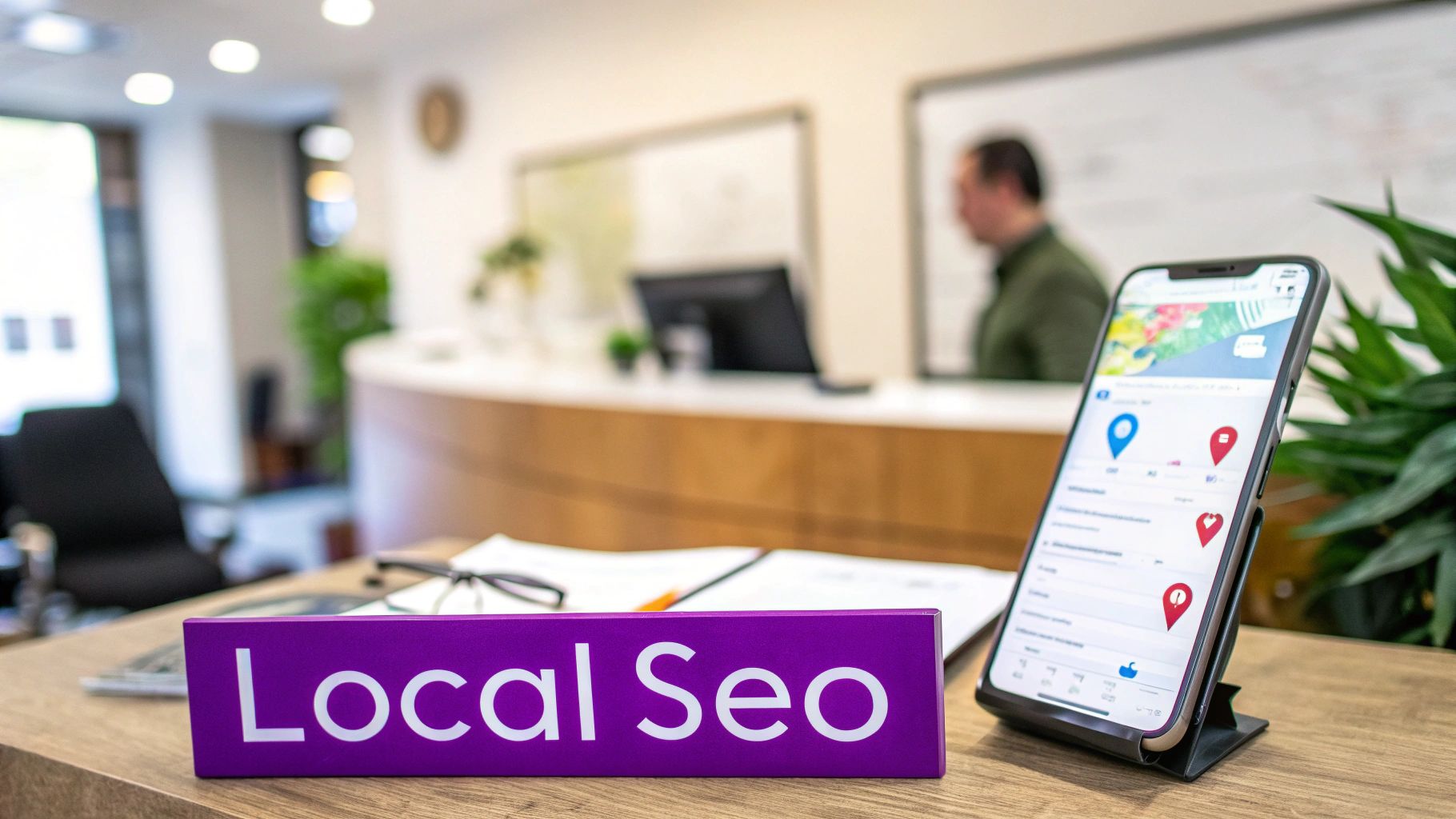
Local SEO is a critical battleground for service-based businesses, and this case study of a personal injury law firm illustrates how to dominate a highly competitive local market. The strategy revolves around building hyper-local authority through a meticulously optimized Google Business Profile (GBP), consistent local citations, and geo-targeted content. This is one of the most impactful case studies in SEO for any business reliant on local clientele because it provides a clear roadmap to capturing high-intent "near me" searches.
The core of this approach is to establish undeniable relevance and prominence within a specific geographic area. This is achieved by creating a powerful web of local signals, from ensuring NAP (Name, Address, Phone) consistency across all online directories to creating service pages for each city or neighborhood served. Every tactic is designed to prove to Google that the business is the most authoritative local answer for a user's query.
The Strategy and Metrics
By focusing intensely on local ranking factors, the law firm achieved a #1 ranking for "personal injury lawyer [city]" in just five months. This resulted in a 320% increase in qualified leads, growing from 8 per month to over 32 per month purely from organic search.
- Google Business Profile: The firm’s GBP was fully optimized with services, high-quality photos, and consistent posts, ultimately accumulating over 45 client reviews with a 4.8-star average rating.
- Local Citations: They secured listings in over 50 high-authority local and legal-specific directories (like Avvo and Justia), ensuring NAP consistency everywhere.
- Location-Specific Content: Dedicated landing pages were built for each target city, featuring local case results and area-specific information, which captured long-tail local search traffic.
Actionable Takeaways for Your SEO Strategy
This model is perfect for any business that serves a local community, from plumbers and dentists to consultants and retailers. It demonstrates that you can outperform larger, national competitors by focusing on what truly matters to local customers and search engines.
To replicate this local SEO success, follow this playbook:
Claim and Optimize GBP: Completely fill out your Google Business Profile. This is your most important local SEO asset. Add services, photos, hours, and encourage reviews.
Ensure NAP Consistency: Audit your online presence to ensure your business Name, Address, and Phone number are identical across all platforms and directories.
Build Local Citations: Systematically submit your business to top local and industry-specific directories. Use a service or perform this manually for maximum control.
Create Location-Specific Pages: Develop unique service pages for each major city or neighborhood you serve. Detail your services and include local testimonials or case studies.
Acquire Local Backlinks: Earn links from other local businesses, chambers of commerce, and community event websites to strengthen your local authority.
5. Healthcare Provider SEO: Medical Practice Increases Patient Inquiries by 280%
Healthcare SEO is a highly specialized field where trust and authority are paramount. This is a critical example among case studies in SEO because it demonstrates the immense impact of Google's E-E-A-T (Experience, Expertise, Authoritativeness, and Trustworthiness) guidelines in a "Your Money or Your Life" (YMYL) industry. Success here isn't just about keywords; it's about building an unimpeachable digital reputation.
The core strategy for this medical practice was to shift from general branding to patient-centric, problem-focused content. Instead of just targeting "orthopedic doctor near me," they created comprehensive, medically reviewed pages for specific conditions like "knee replacement recovery" or "carpal tunnel syndrome treatment." This approach directly addressed the search intent of potential patients seeking information and solutions, establishing the practice as a trustworthy authority before a patient ever picked up the phone.
The Strategy and Metrics
By focusing on patient pain points and building robust E-E-A-T signals, the practice achieved significant growth in qualified leads. Their strategy revolved around creating in-depth educational resources that Google could confidently recommend to users making critical health decisions.
- Condition-Based Keywords: An orthopedic practice achieved top 3 rankings for over 15 high-intent, condition-based keywords.
- Patient Inquiries: Organic patient inquiries surged from an average of 12 per month to 45 per month, a 280% increase.
- Trust and Conversions: By prominently featuring doctor credentials and patient testimonials, the site’s conversion rate jumped to 12%, far exceeding the typical 4% healthcare industry average.
Actionable Takeaways for Your SEO Strategy
This model is essential for any service provider in a YMYL niche, including finance, law, and especially healthcare. It proves that building trust through content and technical signals directly translates to measurable business growth. To apply these principles, focus on demonstrating your expertise at every digital touchpoint.
Research Patient Intent: Use keyword research tools to understand how patients search for symptoms, conditions, and treatments, not just provider names.
Create Comprehensive Condition Pages: Develop long-form pages (2,500-4,000 words) that cover a single condition in detail, including causes, symptoms, diagnosis, and treatment options.
Showcase E-E-A-T: Prominently display doctor bios, credentials, certifications, and affiliations on your website.
Implement Medical Schema: Use structured data like MedicalBusiness and MedicalCondition to help search engines understand your content's context.
Build Authority with Citations: Secure listings and positive reviews on respected medical directories like Healthgrades, Zocdoc, and Vitals.
Link to Authoritative Sources: Reference credible institutions like the Mayo Clinic or NIH to support your claims and build topical relevance.
6. B2B SaaS SEO: Enterprise Software Company Generates $2M in Pipeline from Organic
Moving beyond top-of-funnel traffic, B2B SaaS SEO focuses on attracting high-intent users actively searching for a solution. This approach targets keywords across the entire buyer journey, from awareness to decision, with a heavy emphasis on bottom-of-funnel content that directly drives qualified leads and revenue. This is one of the most impactful case studies in SEO for B2B companies because it proves organic search can be a primary pipeline driver, not just a traffic source.
The strategy involves creating highly specific content assets tailored to users in the evaluation and purchase stages. This includes direct competitor comparison pages, ROI calculators, integration guides, and content optimized for branded competitor keywords. By addressing the precise questions and pain points of potential customers, this model captures leads who are much closer to making a purchasing decision, resulting in a higher conversion rate and a more direct link between SEO efforts and revenue.

The Strategy and Metrics
A B2B enterprise software company implemented this full-funnel strategy and generated over $2 million in attributed sales pipeline annually from organic search. By mapping content to user intent, they were able to dominate search results for keywords that indicated a strong purchase signal.
- Comparison Content: Pages targeting "[competitor] vs. [their brand]" keywords attracted users in the final stages of evaluation, directly influencing their decision.
- High-Intent Keywords: The company achieved a #1 ranking for its primary product keyword and over 30 secondary keywords, capturing a significant share of the most valuable traffic.
- Pipeline Generation: The organic channel became a predictable source of high-quality leads, with clear attribution to specific content pieces like ROI calculators and product guides.
Actionable Takeaways for Your SEO Strategy
This model is perfect for SaaS businesses that need to demonstrate a clear ROI from their marketing efforts. It connects SEO directly to sales pipeline and revenue, making it easier to secure buy-in and investment. It's a strategic pivot from vanity metrics like traffic to business-critical outcomes like qualified leads.
To replicate this success, follow this playbook:
Map the Buyer Journey: Identify the questions and keywords your audience uses at each stage, from problem awareness to solution comparison.
Create Bottom-of-Funnel Content: Develop comparison pages ("vs." keywords), ROI calculators, and detailed integration guides that answer specific, late-stage questions.
Optimize for Competitor Keywords: Target branded keywords of your competitors to capture users who are actively looking for alternatives.
Implement Conversion Tracking: Ensure every high-value page has clear calls-to-action (e.g., "Request a Demo," "Get Pricing") and robust conversion tracking.
Build Authority with Backlinks: Secure links from reputable SaaS directories, industry review sites, and publications to strengthen your domain authority and content rankings.
7. eCommerce Brand SEO: Boutique Retailer Scales Organic Revenue from $50K to $800K
This success story demonstrates how a mid-sized boutique retailer transformed its online presence by shifting focus from paid ads to a comprehensive organic strategy. The approach combined long-tail keyword targeting, unique product content, and technical SEO to drive qualified traffic and massive revenue growth. This is a powerful entry in our list of case studies in SEO because it proves smaller eCommerce brands can achieve exponential growth without massive ad budgets.
The core principle was to capture high-intent buyers searching for specific product attributes rather than broad, competitive terms. By optimizing product pages and creating supporting content like buying guides, the brand built authority and visibility in niche segments. This created a sustainable revenue stream that grew from $50K to over $800K annually, proving the immense ROI of a well-executed organic strategy.
The Strategy and Metrics
The retailer implemented a multi-faceted SEO plan focused on product discoverability and user experience. This holistic approach led to a 1,500% increase in annual organic revenue and established organic search as a primary sales channel, now accounting for 35% of total online sales.
- Long-Tail Keyword Targeting: They ranked in the top three positions for over 200 long-tail product keywords, capturing highly qualified traffic ready to convert.
- Content and Conversion Rate Optimization: By creating unique product descriptions, implementing schema markup for rich snippets, and prominently featuring customer reviews, they improved click-through rates and on-page conversions.
- Technical SEO: Optimizing image alt text, building a logical internal linking structure between related products, and ensuring mobile-friendliness improved site health and search engine crawling.
Actionable Takeaways for Your SEO Strategy
This case study is a blueprint for any eCommerce business aiming to reduce reliance on paid advertising and build a powerful, long-term sales engine. It highlights the importance of understanding customer search intent at the product level. For a comprehensive guide on improving your brand's online visibility and achieving organic growth, consider these Ecommerce SEO best practices.
To replicate this retailer's success, follow this playbook:
Conduct Deep Keyword Research: Identify long-tail, low-competition keywords with clear buyer intent (e.g., "handmade leather tote bag with zipper").
Craft Unique Product Content: Write compelling product descriptions that highlight unique selling propositions (USPs) and benefits, not just features.
Implement Product Schema: Use schema markup to help your products stand out in SERPs with rich snippets like pricing, availability, and review ratings.
Create Supporting Content: Develop gift guides, style guides, and product comparisons that link back to your core product pages to capture seasonal and top-of-funnel traffic.
Prioritize User-Generated Content: Actively encourage and display customer reviews and photos on product pages to build trust and social proof.
8. Startup Growth SEO: Pre-Seed to Series A Through Organic Authority Building
For early-stage startups with limited marketing budgets, investing heavily in paid acquisition is often unsustainable. This case study focuses on a powerful alternative: building organic authority from the ground up to drive growth and attract investors. The strategy centers on leveraging content, founder expertise, and community engagement to create a defensible SEO moat before a Series A funding round. It’s a powerful example in the world of case studies in SEO because it proves organic growth is a key indicator of product-market fit.
This approach prioritizes long-term value over short-term wins. Instead of just targeting keywords, the startup focuses on becoming a thought leader in its niche. By consistently publishing original research, unique insights, and actionable content, it builds brand credibility and a loyal audience. This organic traction becomes a compelling narrative for investors, demonstrating genuine market demand and a scalable customer acquisition channel.
The Strategy and Metrics
Startups like Notion and OpenPhone used this playbook to achieve significant organic growth pre-funding. One B2B SaaS startup grew from 0 to over 50,000 monthly organic visitors before its Series A, with organic growth metrics featured prominently in its pitch deck. The founder’s active presence in relevant online communities and on social media amplified content reach and established them as a go-to expert.
- Founder Authority: The founder’s personal brand becomes an SEO asset, driving early backlinks and shares through their network.
- Content as a Product: High-value content, such as original reports or free tools, attracts top-of-funnel traffic and earns high-authority links.
- Investor Validation: A steep organic growth curve is used as tangible proof of traction, de-risking the investment and validating the business model.
Actionable Takeaways for Your SEO Strategy
This model is perfect for pre-seed and seed-stage startups aiming to build a sustainable growth engine without relying on venture capital for paid ads. It demonstrates market validation and creates a strong foundation for future scaling.
Follow this playbook to replicate this success:
Define Your Unique Perspective: Identify a clear, unique point of view within your industry that will guide your content.
Establish Founder Presence: Consistently publish insights and engage with your target audience on platforms like LinkedIn, X (formerly Twitter), or relevant forums.
Publish Anchor Content: Create and release original research, data studies, or in-depth guides on a quarterly basis to attract backlinks.
Create Vertical-Specific Content: Address the niche pain points of your target audience with highly specific blog posts, guides, and case studies.
Engage Authentically: Participate in online communities where your ideal customers gather. Answer questions and provide value, don't just promote your product.
Track and Report: Monitor key metrics like organic traffic growth, keyword rankings for core terms, and referral traffic from community engagement to showcase progress.
8 SEO Case Studies Comparison
| HubSpot — Content Hub Strategy | 🔄🔄🔄 High — topic clusters & architecture planning | ⚡⚡ High upfront content production & editorial resources | 📊 Sustainable organic traffic growth; topical authority (6–12 mo) | 💡 SMBs & professional services building thought leadership | ⭐ Establishes scalable topical authority and improved conversions |
|---|---|---|---|---|---|
| Shopify — eCommerce SEO & Schema | 🔄🔄 Medium — technical fixes + page optimization | ⚡⚡⚡ Moderate–high technical & dev effort (schema, performance) | 📊 Significant traffic + conversion lifts; rich snippets & CTR gains | 💡 eCommerce stores focused on product visibility & conversions | ⭐ Direct correlation of SEO to revenue via technical improvements |
| Neil Patel — Authority Link Building | 🔄🔄🔄 Very high — outreach, asset creation, PR | ⚡⚡⚡ High resource intensity (content, outreach, relationships) | 📊 Major DA gains and top rankings over multi-year timelines | 💡 Brands aiming to dominate competitive keywords & authority | ⭐ Long-term domain authority and high-value organic rankings |
| Law Firm — Local SEO for Personal Injury | 🔄🔄 Medium — local citations, GBP, on‑page SEO | ⚡⚡ Moderate ongoing maintenance (reviews, citations) | 📊 Rapid local ranking gains and highly qualified lead increases | 💡 Local service providers and law firms targeting city markets | ⭐ High-converting local visibility and reduced cost-per-lead |
| Healthcare Provider — E-E-A-T Focused SEO | 🔄🔄🔄 High — YMYL, credentialing, compliance needs | ⚡⚡⚡ High (medical expertise, accreditation, strict review) | 📊 Strong patient inquiry growth and trust signals (high intent) | 💡 Medical practices needing authoritative, compliant content | ⭐ Builds trust and compliant authority driving quality leads |
| B2B SaaS — Buyer-Journey SEO & CRO | 🔄🔄🔄 High — mapping funnel content + technical tracking | ⚡⚡ Moderate (content, analytics, sales alignment) | 📊 Measurable pipeline & high-value leads; revenue attribution (6–12 mo) | 💡 Enterprise SaaS seeking predictable organic pipeline | ⭐ Directly ties organic efforts to pipeline and sales outcomes |
| eCommerce Brand — Boutique Retailer Scaling | 🔄🔄 Medium — product content + UX & seasonal strategy | ⚡⚡ Moderate ongoing content and catalog management | 📊 Large organic revenue uplift; lower CAC and better margins | 💡 Small-to-mid eCommerce brands competing with larger retailers | ⭐ Scalable revenue growth from long-tail product visibility |
| Startup Growth SEO — Founder & Authority Building | 🔄🔄🔄 High — founder content, research, community building | ⚡⚡ Low–Moderate (time-intensive for founders, low budget spend) | 📊 Long-term traffic growth and brand authority supporting fundraising (12–18+ mo) | 💡 Early-stage startups prioritizing sustainable growth & PR | ⭐ Cost-effective authority building that aids fundraising and brand trust |
Your Turn: Transform These Insights Into Action
We’ve journeyed through a powerful collection of SEO case studies, each one a blueprint for organic growth. From HubSpot's monumental content hub strategy to the hyperlocal dominance achieved by a personal injury law firm, a clear pattern emerges: success is not accidental. It's the direct result of a well-defined strategy, meticulous execution, and a deep understanding of the target audience.
These stories demolish the myth that SEO is just about keywords and backlinks. True, sustainable growth comes from building authority, serving user intent, and creating value so immense that search engines have no choice but to reward you with visibility. You saw how a B2B SaaS company generated a $2 million pipeline by treating content as a core business asset, and how a boutique eCommerce brand scaled its revenue from $50K to $800K by mastering product-led SEO.
The recurring theme across all these case studies seo examples is the commitment to a long-term vision. They didn't just chase quick wins; they built foundational assets that pay dividends for years.
Your Blueprint for SEO Success
The path forward is about translating these observations into a concrete action plan for your own business. Don't just admire these results; deconstruct the strategies and adapt the core principles.
- Audit Your Foundation: Before building up, you must ensure your base is solid. Is your technical SEO sound? Is your site mobile-friendly and fast? You cannot build a skyscraper on a cracked foundation.
- Define Your Topical Authority: Like HubSpot, identify the core subject matter where you can become the definitive resource. What is your "hub"? What are the "spokes" that support it? Map this out before writing a single word.
- Master Your Niche: The law firm and healthcare provider case studies prove that you don't need to dominate the entire internet. You just need to dominate the search results that matter for your specific service area or specialty. Focus your efforts where they will have the most impact.
- Create Value-Driven Assets: Your goal isn't just to create content, but to create assets. This could be a comprehensive guide, a free tool, an original data study, or a detailed case study of your own. These are the pieces that attract high-authority links naturally, as demonstrated by Neil Patel's approach.
From Case Study to Reality
The difference between reading about success and achieving it lies in implementation. The strategies outlined in these case studies seo are not theoretical; they are practical, replicable frameworks waiting to be applied. Start small. Pick one core strategy that resonates most with your business goals. For an eCommerce brand, that might be optimizing category pages like Shopify. For a startup, it might be building authority from day one.
The key is to begin. Document your starting metrics, outline your strategic approach based on these examples, and commit to consistent execution. To explore a wider array of additional SEO success stories and case studies, you can visit their dedicated section for even more inspiration and tactical ideas. Every major SEO success story started with a single, deliberate step. Today, you can take yours.
Ready to build your own success story? At Rebus, we specialize in transforming the complex strategies from these SEO case studies into measurable results for our clients. If you're ready to define, strategize, and execute a custom SEO plan that drives sustainable growth, our team is here to help. Visit us at Rebus to start building your case study today.