12 High-Impact Ecommerce Marketing Strategies to Fuel Growth in 2025
In the hyper-competitive world of online retail, simply having a great product is not enough. Sustainable growth requires a multi-channel approach built on proven ecommerce marketing strategies that attract, convert, and retain customers. The challenge isn't a lack of options, but knowing where to focus your resources for maximum impact. Many businesses spread themselves too thin, chasing fleeting trends instead of mastering the fundamentals that drive consistent revenue and build brand loyalty.
This guide cuts through the noise. We've compiled a comprehensive blueprint of 12 high-impact, actionable strategies that span the entire customer lifecycle, from initial discovery to loyal advocacy. You won't find vague advice here. Instead, each strategy is broken down into specific tactics, key performance indicators (KPIs) to measure success, and real-world examples to provide a clear roadmap for implementation. We'll cover everything from foundational tactics like SEO and Paid Search to sophisticated retention techniques involving loyalty programs and lifecycle marketing.
Our goal is to provide a prioritized, actionable roundup that helps you build a resilient, profitable ecommerce engine. Whether you are a startup establishing your market presence or an established brand looking to optimize your marketing mix, these ecommerce marketing strategies offer a structured path to growth. For those looking to integrate advanced technology into their plan, consider exploring these 12 AI-Powered Ecommerce Growth Strategies to further amplify your efforts. This article will equip you with the knowledge to make informed decisions, allocate your budget effectively, and turn casual browsers into dedicated customers.
1. Conversion Rate Optimization (CRO)
Conversion Rate Optimization (CRO) is one of the most powerful ecommerce marketing strategies because it focuses on maximizing the value of the traffic you already have. Instead of spending more to attract new visitors, CRO systematically improves your website to increase the percentage of existing visitors who make a purchase. This process involves analyzing user behavior, forming hypotheses about potential improvements, and using A/B or multivariate testing to validate changes. The core benefit is increased revenue and a better user experience without a corresponding increase in ad spend.

This approach delivers direct, measurable returns. For example, Amazon continuously refines its one-click checkout process, a masterclass in CRO that has generated billions by removing friction. Similarly, Shopify store owners often boost their Average Order Value (AOV) by 15-35% simply by testing different upsell and cross-sell placements on product and cart pages. These gains compound over time, making CRO a foundational strategy for sustainable growth.
How to Implement CRO
- Analyze High-Traffic Pages First: Start optimizing pages like your homepage, top-selling product pages, and checkout funnel. These areas offer the fastest path to statistically significant test results.
- Isolate Test Variables: To understand what truly moves the needle, test one element at a time. For instance, test a new call-to-action button color or a different headline, but not both simultaneously.
- Leverage User Behavior Data: Use tools like heatmaps (e.g., Hotjar) and session recordings to see where users click, scroll, and drop off. This insight is crucial for forming effective test hypotheses. For a deeper dive into techniques, you can explore more on how to improve website conversion rates on rebusadvertising.com.
- Focus on Mobile: A poor mobile experience can cripple conversions. Always review and test your mobile site separately, ensuring buttons are easy to tap and forms are simple to complete on a small screen.
2. Retargeting and Remarketing Campaigns
Retargeting and remarketing are essential ecommerce marketing strategies designed to re-engage users who have previously visited your website but left without making a purchase. Using pixel-based technology, these campaigns display targeted ads to past visitors as they browse other sites, social media platforms, or search engines. This keeps your brand top-of-mind, reminds users of their interest, and effectively brings high-intent traffic back to your store to complete a purchase. It's a highly efficient way to recover potentially lost revenue from an already warm audience.
The impact of this strategy is significant. Ecommerce stores that implement abandoned cart retargeting often recover between 10-15% of otherwise lost sales. Fashion retailers like ASOS leverage dynamic retargeting to show shoppers the exact products they previously viewed, creating a personalized and compelling reason to return. Similarly, platforms like Criteo consistently deliver an average ROI of 8x for their retail clients by optimizing these follow-up ads, proving retargeting is a critical tool for maximizing customer lifetime value.
How to Implement Retargeting Campaigns
- Segment Your Audiences: Create different audience lists based on user behavior. For example, a user who abandoned a cart is much more valuable than someone who only viewed the homepage. Tailor your ad copy and offers accordingly.
- Use Dynamic Product Ads (DPAs): Connect your product catalog to your ad platform (e.g., Meta, Google) to automatically show users the specific products they viewed or added to their cart. This hyper-personalization dramatically increases click-through rates.
- Implement Frequency Caps: To avoid annoying users and causing ad fatigue, set a limit on how many times an individual sees your ad within a certain period. A cap of 3-5 impressions per day is a common starting point.
- Time Your Ads Strategically: Don’t show an ad the second someone leaves your site. Delay your campaign to start a few hours or even a day later. For a deeper understanding of the mechanics, you can explore more on what is retargeting advertising on rebusadvertising.com.
3. Email Marketing and Marketing Automation
Email marketing remains one of the highest-ROI ecommerce marketing strategies, and when paired with automation, it becomes a powerhouse for nurturing leads and driving repeat purchases. Instead of generic email blasts, this strategy uses customer behavior to trigger personalized, timely messages. It allows brands to connect with customers at critical points in their journey, from the initial welcome to post-purchase follow-ups and re-engagement campaigns, scaling personalized communication without manual effort.
This automated, one-to-one communication drives incredible results. For instance, abandoned cart emails consistently recover 15-20% of otherwise lost sales for ecommerce stores. Brands like Sephora attribute up to 30% of their online revenue to highly segmented lifecycle emails, while Warby Parker sees its welcome series convert new subscribers at rates exceeding 40%. The direct link between automated messaging and revenue makes this an essential strategy for growth.
How to Implement Email Marketing and Automation
- Build a Welcome Series: Immediately engage new subscribers with a multi-part welcome series that introduces your brand story, sets expectations, and offers an initial incentive. This is your best chance to make a strong first impression.
- Start with Core Workflows: Don't try to automate everything at once. Begin with high-impact flows like the welcome series, abandoned cart reminders, and post-purchase thank-you emails. You can get inspiration from these abandoned cart email examples from rebusadvertising.com.
- Segment Your Audience: Group your contacts based on purchase history, browsing behavior, and engagement levels. This allows you to send far more relevant content, from product recommendations to exclusive offers for VIP customers.
- Use Behavioral Triggers: Set up automations based on specific user actions, such as viewing a product multiple times, abandoning a cart, or making a purchase. This ensures your messages are timely and highly relevant.
4. Search Engine Optimization (SEO)
Search Engine Optimization (SEO) is a fundamental ecommerce marketing strategy designed to increase your store’s visibility in organic search engine results. By optimizing your website's content, technical structure, and authority, you can attract highly qualified, intent-driven traffic without paying for each click. This approach builds a sustainable asset that generates consistent traffic and sales over the long term, making your brand a go-to destination for customers actively searching for your products.
This strategy's power lies in capturing high-intent customers. For instance, data shows that ecommerce sites ranking in the top three organic positions capture nearly 48% of all clicks for a given search. Brands like Zappos and Etsy built their dominance not just through ads but through meticulous category page optimization and a comprehensive SEO strategy that addressed user intent at every stage. A well-executed SEO plan creates brand authority and trust, directly impacting your bottom line.
How to Implement SEO
- Target Commercial Intent Keywords: Focus on long-tail keywords that signal a user is ready to buy (e.g., "men's waterproof leather hiking boots size 11" instead of just "boots").
- Optimize Product and Category Pages: Write unique, detailed descriptions for every product and category page. Avoid duplicating manufacturer descriptions and include relevant keywords naturally. To improve your online visibility and drive organic traffic, consider strategies for mastering company SEO.
- Implement Schema Markup: Use structured data (schema) for products, reviews, and pricing. This helps search engines understand your content better and can result in rich snippets, making your listings stand out in search results.
- Improve Site Speed and Core Web Vitals: A fast, responsive site is crucial for both user experience and search rankings. Optimize images, leverage browser caching, and ensure your site passes Google's Core Web Vitals assessment.
5. Paid Search (Google Ads)
Paid search, dominated by platforms like Google Ads, is one of the most direct and high-intent ecommerce marketing strategies available. It allows brands to capture customers at the exact moment they are searching for products to buy. Unlike organic strategies that take time to build momentum, paid search delivers immediate visibility, placing your products at the top of search results for relevant queries. This approach provides granular control over targeting, budgeting, and messaging, enabling measurable ROI from day one.
This strategy's effectiveness is proven across industries. For instance, electronics retailers often see a 4x to 6x Return on Ad Spend (ROAS) using Google's Performance Max campaigns, which leverage AI to find customers across all of Google's channels. Fashion brands frequently achieve a 300-500% ROI by targeting specific product keywords and running dynamic Google Shopping ads. The ability to precisely track every dollar spent against the revenue it generates makes paid search an indispensable tool for scalable growth.
How to Implement Paid Search
- Prioritize Google Shopping: For most ecommerce businesses, Shopping campaigns are non-negotiable. They display product images, prices, and reviews directly in search results, leading to higher click-through and conversion rates than standard text ads.
- Build a Negative Keyword List: Actively add negative keywords to your campaigns to prevent wasted ad spend on irrelevant searches. Regularly review your Search Terms Report to find terms that are triggering your ads but are not converting.
- Implement Robust Conversion Tracking: Before you spend a single dollar, ensure your conversion tracking is set up correctly to measure sales, revenue, and ROAS. This data is essential for making informed optimization and budgeting decisions.
- Leverage Automated Bidding: After gathering enough conversion data (typically 30-50 conversions in a 30-day period), test automated bidding strategies like Target ROAS or Maximize Conversion Value. Google's algorithm can often optimize bids more effectively than manual adjustments.
6. Social Media Marketing and Paid Social
Social media marketing is a vital ecommerce strategy that combines organic content, community engagement, and paid advertising to build brand presence and drive direct sales. It transforms platforms like Instagram, TikTok, and Facebook from simple social networks into powerful sales channels. By creating engaging content and using targeted ads, brands can reach hyper-specific audiences, turning passive scrollers into active customers. The primary benefit is the ability to connect with consumers where they spend their time, building brand loyalty and generating revenue through integrated features like shoppable posts.
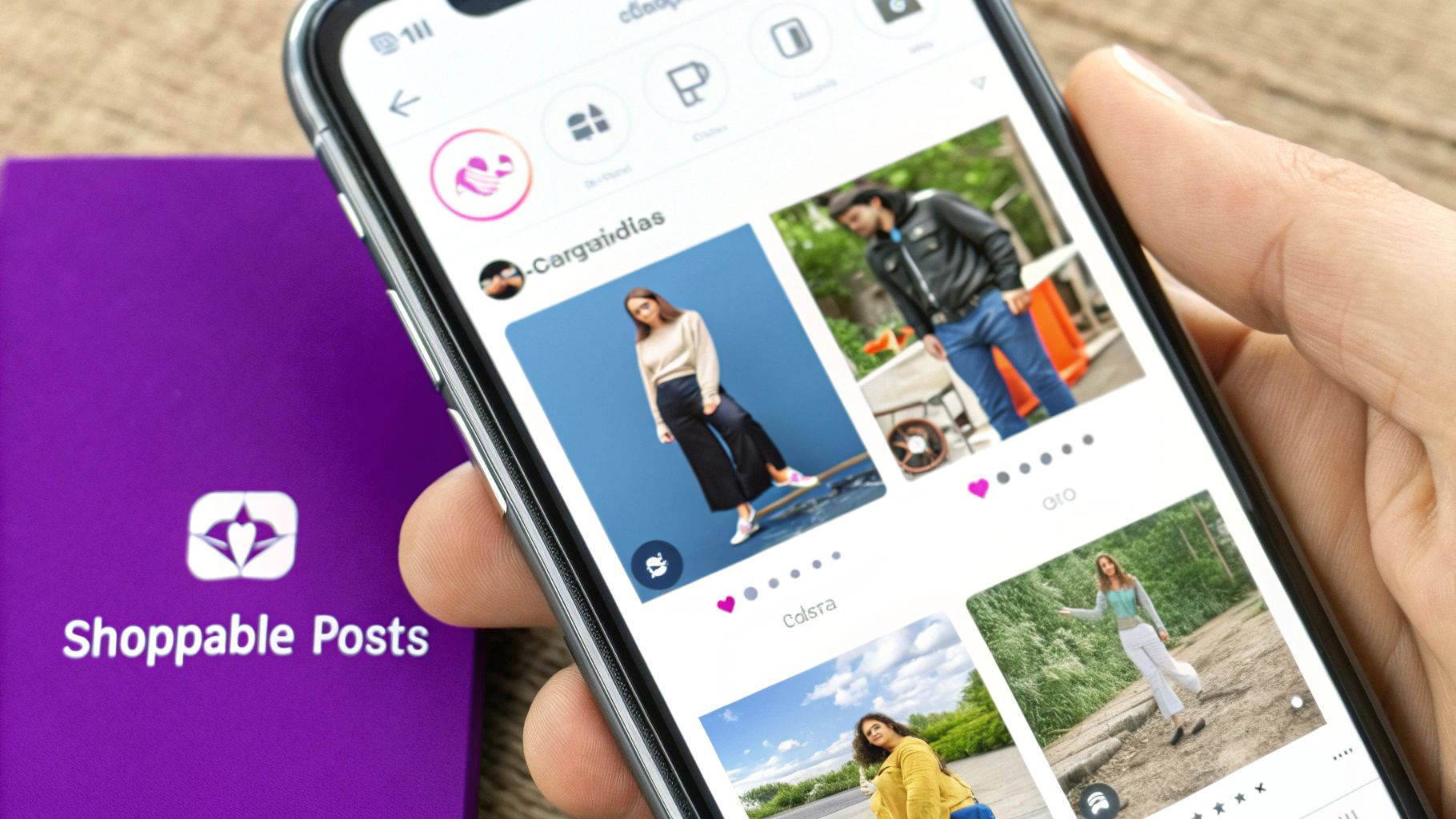
This approach delivers measurable results by closing the gap between discovery and purchase. For instance, Glossier built a multi-billion dollar valuation largely through its Instagram community, leveraging user-generated content to create an authentic brand movement. Similarly, fashion brands often achieve a 5-10x Return On Ad Spend (ROAS) using Facebook and Instagram's powerful targeting and retargeting capabilities. When executed well, this blend of organic and paid social becomes one of the most effective ecommerce marketing strategies for scalable growth.
How to Implement Social Media Marketing
- Choose the Right Platforms: Don’t try to be everywhere. Focus your efforts on the channels where your target audience is most active, whether that’s Instagram for visual products or TikTok for trend-driven items.
- Leverage Lookalike Audiences: Upload a list of your best customers to platforms like Facebook Ads Manager. The algorithm will then find and target new users who share similar characteristics, dramatically improving ad efficiency.
- Partner with Micro-Influencers: Collaborate with smaller, niche influencers who have a highly engaged and trusting audience. Their endorsements often feel more authentic and can drive higher conversion rates than those from larger creators.
- Use Retargeting for Conversions: Create campaigns that specifically target users who have visited your site, added items to their cart, or engaged with your page. Showing these warm leads a tailored ad is a proven way to recover potentially lost sales.
7. Content Marketing and Blog Strategy
Content marketing is an essential ecommerce marketing strategy that focuses on creating and distributing valuable, relevant, and consistent content to attract and retain a clearly defined audience. Instead of directly pitching products, this approach builds brand authority, nurtures customer relationships, and supports SEO efforts by providing useful information through blogs, guides, videos, and infographics. The goal is to become a trusted resource, guiding potential customers through their buying journey long before they are ready to make a purchase.
This strategy drives significant organic traffic and builds lasting brand equity. For instance, REI’s extensive library of expert advice on outdoor activities not only attracts its target audience but also positions the brand as an authority, making it the natural choice for purchasing gear. Similarly, Shopify’s blog provides immense value to aspiring entrepreneurs, capturing them at the very beginning of their ecommerce journey and building loyalty to its platform. These efforts translate directly into qualified leads and a stronger customer base.
How to Implement a Content Marketing Strategy
- Address Customer Pain Points: Base your content calendar on the questions and problems your target audience is searching for. Use keyword research tools to identify high-intent queries related to your industry and products.
- Create Pillar and Cluster Content: Develop comprehensive "pillar" pages on core topics (e.g., "The Ultimate Guide to Skincare Routines"). Then, create shorter "cluster" posts that link back to the pillar page, covering more specific subtopics. This structure boosts SEO authority.
- Optimize for Featured Snippets: Structure your content to directly answer common questions. Use headings, lists, and concise definitions to increase your chances of being featured in Google's answer boxes, driving significant click-through rates.
- Integrate Product Mentions Naturally: Seamlessly weave links to your product pages within your content where it makes sense. For example, a blog post about "How to Fix Dry Skin" should naturally link to your hydrating moisturizer.
- Promote and Repurpose Content: Don’t just publish and forget. Promote every piece of content through your email newsletter and social media channels. Repurpose a detailed blog post into an infographic, a video, or a series of social media tips to maximize its reach.
8. Influencer and Ambassador Marketing
Influencer and ambassador marketing is a highly effective ecommerce marketing strategy that leverages trusted creators to provide authentic endorsements and direct access to niche audiences. Instead of traditional advertising, this approach relies on the credibility of individuals who have built a loyal following. By partnering with these creators, brands can tap into established communities, generate high-quality user-generated content (UGC), and drive sales through genuine recommendations. This method delivers strong engagement and a high return on investment because it feels less like an ad and more like a trusted peer review.
This strategy has built entire empires from the ground up. For example, watch brand Daniel Wellington grew into a $200M+ company almost exclusively through influencer partnerships. Similarly, fitness apparel giant Gymshark cultivated a community of dedicated fitness ambassadors who authentically shared their workout journeys, building a billion-dollar brand. These successes demonstrate that aligning with the right voices can create powerful, long-term brand equity and explosive growth.
How to Implement Influencer and Ambassador Marketing
- Focus on Micro-Influencers: Prioritize creators with 10,000 to 100,000 followers. They often have higher engagement rates, a more dedicated community, and offer better ROI than macro-influencers.
- Vet Authenticity Thoroughly: Use tools like HypeAuditor to analyze an influencer’s audience demographics, engagement quality, and check for fake followers. Look for genuine interaction in their comments section.
- Track Performance Accurately: Provide each influencer with unique promo codes and affiliate links. This allows you to directly measure the sales and traffic they generate, making it easy to calculate ROI for each partnership.
- Secure Content Rights: Always include a clause in your agreement that gives you the rights to repurpose the user-generated content they create. This high-quality, authentic content is perfect for your own social media, ads, and product pages.
9. Customer Reviews and Social Proof Strategy
A robust Customer Reviews and Social Proof Strategy is fundamental to building trust and driving sales. This approach leverages the power of existing customers to influence new ones by showcasing authentic reviews, ratings, user-generated content (UGC), and testimonials. Since 92% of consumers trust peer recommendations over traditional advertising, social proof acts as a powerful conversion tool, validating a product’s quality and a brand's credibility directly at the point of purchase. Integrating this feedback across your website and marketing channels is one of the most effective ecommerce marketing strategies for overcoming buyer hesitation.
The impact of social proof is direct and significant. Products on Amazon with over 100 reviews often see conversion rates increase by 3 to 5 times compared to those with none. Similarly, retail sites have seen average conversion rates jump from 2% to over 12% just by prominently featuring customer reviews. This strategy builds a transparent relationship with shoppers, demonstrating that you value their feedback and are confident in your offerings. This authenticity not only boosts immediate sales but also fosters long-term customer loyalty and brand advocacy.
How to Implement a Social Proof Strategy
- Automate Review Requests: Use your email marketing platform to send automated review request emails 3-7 days after a customer receives their order. This timing is crucial for capturing fresh, relevant feedback.
- Simplify the Submission Process: Ensure your review submission form is mobile-friendly and requires minimal effort. A one-click rating system followed by an optional comment box reduces friction and increases participation.
- Display Reviews Prominently: Feature your best reviews, star ratings, and user-generated photos directly on your homepage, product pages, and even in checkout to reinforce the purchase decision.
- Engage with All Feedback: Respond publicly and professionally to both positive and negative reviews. Addressing criticism shows accountability and can turn a negative experience into a positive brand interaction.
10. Video Marketing and Commerce
Video marketing has become one of the most essential ecommerce marketing strategies for capturing audience attention and driving sales. It moves beyond static images to show products in action through demos, lifestyle content, testimonials, and live shopping events. This dynamic format educates customers, builds trust, and creates a more engaging path to purchase across platforms like YouTube, TikTok, and even directly on your product pages. The goal is to connect with consumers on a deeper level, leading to higher conversion rates and brand loyalty.
The impact is significant and measurable. Product videos have been shown to increase conversion rates by an average of 30% when embedded on ecommerce pages. On social media, short-form video reigns supreme, with platforms like TikTok generating engagement rates that far surpass static posts on other networks. Furthermore, shoppable video formats and live shopping events are bridging the gap between entertainment and commerce, turning passive viewers into active buyers in real-time.
How to Implement Video Marketing
- Start with Simple Product Demos: You don't need a massive production budget. Use a modern smartphone to create clear, simple videos showcasing your product's features and benefits from multiple angles.
- Create for Short-Form Platforms: Focus on creating vertical videos between 15-60 seconds for platforms like TikTok, Instagram Reels, and YouTube Shorts. Keep them fast-paced and engaging to capture attention quickly.
- Embed Videos on Product Pages: Adding a video to a product detail page can significantly boost conversions and improve SEO by increasing time on page.
- Include Captions: Since up to 80% of social media videos are watched without sound, adding clear, easy-to-read captions is crucial for message comprehension and accessibility.
- Leverage User-Generated Content: Encourage customers to submit their own videos using your products. This authentic content acts as powerful social proof and is often more trusted than branded marketing.
11. Loyalty Programs and Customer Retention
Focusing on customer retention through loyalty programs is one of the most cost-effective ecommerce marketing strategies. Acquiring a new customer can cost five times more than retaining an existing one, making loyalty a direct driver of profitability. These programs reward repeat purchasers with points, exclusive access, or special perks, fostering an emotional connection that turns one-time buyers into brand advocates and increases customer lifetime value (LTV).
This strategy yields impressive, quantifiable results. Amazon Prime members, for instance, spend over twice as much annually ($1,500+) compared to non-members ($625). Similarly, Sephora’s VIB (Very Important Beauty Insider) program has cultivated a community where members spend up to eight times more than other customers. These examples prove that a well-designed loyalty program doesn't just offer discounts; it builds a profitable, long-term customer relationship that is difficult for competitors to replicate.
How to Implement a Loyalty Program
- Offer Immediate Value: Make joining effortless and provide an instant reward, like a welcome bonus or a first-purchase discount, to encourage immediate sign-ups.
- Design a Tiered Structure: Create tiers (e.g., Silver, Gold, Platinum) that unlock better rewards as customers spend more. This gamifies the experience and incentivizes higher average order values.
- Go Beyond Discounts: While discounts are effective, incorporate experiential rewards like early access to new products, exclusive content, or invitations to special events to build a stronger brand connection.
- Promote Your Program Actively: Use email, SMS, and on-site banners to remind customers of their points balance and available rewards, encouraging them to return and redeem.
12. Data Analytics and Attribution Modeling
Data analytics and attribution modeling are essential ecommerce marketing strategies for understanding which channels truly drive revenue. Instead of guessing, this approach systematically assigns credit to various touchpoints along the customer journey, from the first blog post they read to the final ad they clicked. This clarity allows you to stop wasting money on underperforming channels and double down on what works, leading to more efficient budget allocation and higher overall return on investment.
The impact is significant and direct. Brands using multi-touch attribution often discover that organic channels assist in 40-60% of conversions, preventing them from mistakenly cutting their SEO or content marketing budgets. Similarly, a clear analytics framework can improve overall Return on Ad Spend (ROAS) by 20-30% by revealing the true value of each campaign. It transforms your marketing from a cost center into a predictable, data-driven growth engine.
How to Implement Data Analytics and Attribution Modeling
- Establish a UTM Strategy: Implement a consistent UTM parameter strategy across all marketing campaigns. This ensures every link is tagged correctly, allowing you to track performance accurately in tools like Google Analytics.
- Set Up Robust Conversion Tracking: Ensure conversion tracking is correctly configured in your analytics platforms (e.g., Google Analytics 4) and ad networks. This is the foundation for any meaningful analysis.
- Model Different Attribution Methods: Don't rely solely on last-click attribution. Compare various models like first-click, linear, and time-decay to get a more holistic view of which channels influence different stages of the buying cycle.
- Conduct Incrementality Tests: To validate the true impact of a channel, run incrementality tests. Pause a campaign (e.g., branded search) and measure the effect on overall sales to determine its real contribution versus what would have happened anyway.
12-Point Ecommerce Marketing Strategy Comparison
| Conversion Rate Optimization (CRO) | 🔄 Medium–High — testing framework & UX expertise | ⚡ Moderate — CRO tools, analytics, product/UX time | 📊 Measurable uplift in conversion rate, lower CPA | 💡 High-traffic pages, checkout & landing pages | ⭐ Maximizes ROI from existing traffic, data-driven wins |
|---|---|---|---|---|---|
| Retargeting & Remarketing Campaigns | 🔄 Low–Medium — pixel/list setup & sequencing | ⚡ Moderate — ad spend, creative assets, platform setup | 📊 Higher conversion rates from warm audiences, recovered revenue | 💡 Cart abandoners, recent visitors, promo recovery | ⭐ Low CPA vs cold traffic, scalable cross-channel |
| Email Marketing & Automation | 🔄 Medium — workflow design & deliverability management | ⚡ Moderate — ESP, content, list building, integrations | 📊 High ROI, increased repeat purchases & lifecycle conversion | 💡 Welcome series, abandoned cart, re-engagement flows | ⭐ Owned channel with strong personalization & automation |
| Search Engine Optimization (SEO) | 🔄 High — technical, content & link-building effort | ⚡ High — content creation, developer time, outreach | 📊 Long-term organic traffic growth and compounding visibility | 💡 Category/product pages, content hubs, competitive niches | ⭐ Cost-effective, intent-driven traffic and authority build |
| Paid Search (Google Ads) | 🔄 Medium–High — campaign structure & bidding strategy | ⚡ High — ad budget, feed management, account optimization | 📊 Immediate, measurable traffic & sales; controllable ROAS | 💡 Product launches, high-intent keywords, seasonal demand | ⭐ Fast customer acquisition with precise intent targeting |
| Social Media Marketing & Paid Social | 🔄 Medium — content cadence, community & ad ops | ⚡ Moderate–High — creative production, ad spend, community team | 📊 Improved brand awareness, engagement; variable direct sales | 💡 Visual/brand-driven products, awareness & influencer-led campaigns | ⭐ Massive reach, storytelling and shoppable formats |
| Content Marketing & Blog Strategy | 🔄 Medium–High — editorial planning and SEO alignment | ⚡ Moderate — writers, SEO, promotion resources | 📊 Organic traffic growth, lead nurturing, long-term authority | 💡 Top-of-funnel education, complex buying journeys | ⭐ Builds trust, supports SEO and customer education |
| Influencer & Ambassador Marketing | 🔄 Medium — discovery, contracts, compliance | ⚡ Moderate — creator fees/products, management tools | 📊 High engagement, niche audience acquisition, UGC | 💡 Social-first brands, trend-driven or lifestyle products | ⭐ Authentic endorsements and repurposable content |
| Customer Reviews & Social Proof | 🔄 Low–Medium — automation & moderation systems | ⚡ Low–Moderate — review platform, solicitation workflows | 📊 Significant conversion lift, improved trust & SEO | 💡 Product pages, competitive categories, new-product launches | ⭐ Strong conversion impact at relatively low cost |
| Video Marketing & Commerce | 🔄 High — production planning, editing, distribution | ⚡ High — production, hosting, promotion budgets | 📊 Higher engagement and conversion uplift; platform reach | 💡 Demos, tutorials, live shopping, social short-form | ⭐ Powerful storytelling, high engagement and repurposing value |
| Loyalty Programs & Customer Retention | 🔄 High — program design, tiering, fulfillment systems | ⚡ High — platform fees, rewards costs, ops support | 📊 Increased LTV, repeat purchase frequency, advocacy | 💡 Subscription models, repeat-purchase categories | ⭐ Drives retention and higher customer lifetime value |
| Data Analytics & Attribution Modeling | 🔄 High — integrations, modeling, data governance | ⚡ High — analytics tools, engineers, tracking setup | 📊 Clearer channel ROI, better budget allocation, incrementality insights | 💡 Multi-channel stacks, scaling spend decisions | ⭐ Reveals true performance and optimizes investment decisions |
From Strategy to Success: Your Next Steps
You've just navigated a comprehensive map of today's most effective ecommerce marketing strategies. From the foundational power of Search Engine Optimization (SEO) and the immediate impact of Paid Search to the long-term relationship-building of Email Marketing and Loyalty Programs, the path to sustainable growth is multifaceted. The sheer volume of options can feel overwhelming, but the goal is not to execute all twelve strategies simultaneously. Instead, the objective is to build a strategic, integrated, and scalable marketing engine.
The journey from a simple checklist to a powerful growth system begins with a clear understanding of your unique business landscape. Your most significant opportunities for immediate impact might lie in optimizing your existing website traffic through Conversion Rate Optimization (CRO), while your long-term competitive advantage could be built on a robust Content Marketing strategy that establishes your brand as an industry authority.
Prioritizing Your Action Plan
To move from theory to execution, your first step is a critical self-assessment. Where are your biggest leaks and your most promising opportunities?
- Low Traffic, High Conversion Rate? Your priority should be top-of-funnel awareness. Double down on SEO to capture organic demand and use Paid Social or Influencer Marketing to introduce your brand to new, highly-targeted audiences.
- High Traffic, Low Conversion Rate? Your focus must be on the user experience. Implement A/B testing as part of a rigorous CRO program and leverage Customer Reviews and social proof to build trust and reduce friction at checkout.
- Strong Initial Sales, Poor Repeat Business? The key is retention. Launch a Loyalty Program, segment your audience for personalized Email Marketing automation, and use Retargeting Campaigns to bring past customers back for their next purchase.
By identifying your specific business challenge, you can select one or two core ecommerce marketing strategies to master first. Dedicate your resources to executing them flawlessly, tracking the right KPIs, and understanding their true impact on your bottom line.
The Power of Integration and Iteration
Ultimately, the most successful brands understand that these channels do not operate in isolation. A powerful SEO strategy provides a steady stream of qualified traffic that can be nurtured through email automation. Data from your Google Ads campaigns can inform your content strategy, revealing what your customers are actively searching for. Insights from your Video Marketing efforts on social media can be repurposed into compelling email content or ad creative. This interconnectedness is where true marketing maturity lies.
Think of your marketing efforts as a flywheel, not a series of disconnected tasks. Each successfully implemented strategy adds momentum, making the next one more effective. This iterative process of implementing, measuring, and optimizing is the core of modern digital marketing. It transforms your approach from a cost center into a predictable, data-driven revenue generator. Adopting this mindset is the most crucial takeaway; the specific ecommerce marketing strategies you employ are the tools, but your commitment to a data-informed, customer-centric, and integrated approach is what will ultimately define your success.
Ready to turn these strategies into a cohesive, high-performance growth engine for your brand? The team at Rebus specializes in architecting and executing integrated ecommerce marketing strategies that drive measurable results. Schedule a consultation with us today to discover how we can help you build and scale a marketing plan tailored to your unique business goals.