Master Facebook Advertising For Attorneys To Drive More Leads
Facebook ads can turn into a reliable source of 50–150 new leads every month when you pair sharp audience filters with posts that speak to your community. It’s less about spending big and more about aiming true.
Understanding The Value Of Facebook Advertising For Attorneys

Filling your pipeline with qualified prospects doesn’t require a massive budget. Boutique and regional firms prove this by combining precise demographic targeting with locally focused content. Imagine an estate planning attorney zeroing in on homeowners aged 35 to 60 within a 20-mile radius. Their feed soon featured invites to free workshops and client win stories—and it paid off.
- Precise demographics keep your ads in front of the right people.
- Community-driven posts earn shares and spark conversations.
- Lower cost per lead than traditional search campaigns.
- Weekly budget tweaks based on live performance data.
Case Study Examples
A personal injury boutique tried something fresh at a neighborhood safety fair. By promoting a free online Q&A tied to the event, they secured 75 sign-ups in just two weeks.
Another family law practice produced a quick video on custody basics and boosted it to parents in their county. The payoff? 60 consultation requests at $22 per lead.
- Tie events directly to your service offerings.
- Use short, on-camera explainers to solve real problems.
- Host live sessions for immediate interaction and trust building.
Linking your CRM to Facebook lead ads automates follow-up. Firms that adopt this often see about a 15% uptick in conversion when leads are nurtured promptly.
How Interest And Behavior Targeting Works
Facebook’s interest and behavior tools let you reach users based on hobbies, page interactions, and more. A personal injury attorney, for instance, can target people following construction-safety pages or engaging with workplace-injury articles. That focus means every dollar works harder.
Structure campaigns by buyer journey:
- Awareness: Share educational videos.
- Consideration: Offer downloadable guides.
- Conversion: Promote free consultations.
Roughly 82% of law firms use Facebook for outreach, and 24.7% of prospective clients say Facebook is their top resource when researching attorneys. Learn more about legal marketing statistics.
“Facebook was our top lead driver, delivering 120 qualified leads in one month with a $25 CPL.”
Comparison Of Social Channels Usage By Law Firms
Below is a quick look at how active law firms are on each platform and where clients find them first:
| 82% | 1 | |
|---|---|---|
| 60% | 2 | |
| 57% | 3 | |
| 45% | 4 |
This table nails it: Facebook remains the go-to channel for broad reach and steady lead flow.
Leveraging Social Proof Features
Adding social proof can push ad engagement up by 30%. Quick wins like client reviews or mini-case studies build instant credibility.
- Embed five-star reviews in your primary ad copy.
- Include short video testimonials highlighting outcomes.
- Showcase anonymized statistics—percentages or settlement figures.
- Feature standout comments from your Page or client group.
Community-focused updates—free legal clinics, local sponsorships, charity events—cement your reputation. Layer in demographic and interest filters so your message lands with maximum impact.
Check out our guide on Facebook PPC advertising for detailed strategy and examples: Facebook PPC Advertising Guide
Begin testing these tactics today and watch your lead count head toward that 50–150 range.
Setting Up Your Attorney Facebook Ads Account
A rock-solid foundation here saves you from compliance headaches and wasted dollars.
Think of your Business Manager and Page setup as your ad campaign’s launching pad. Get this right first, and everything else falls into place.
In one case, a mid-sized firm saw ad rejections drop by 40% simply by tidying up their account settings.
Business Manager Configuration
Start by verifying your law firm’s domain under Brand Safety. This step locks down unauthorized link-sharing and keeps your URLs uniform.
Then, upload your bar license or incorporation documents to confirm your business details. This aligns with state bar advertising requirements and builds trust with both Facebook and potential clients.
Assign Roles And Permissions
- Admin: Managing partner and lead marketer
- Editor: Team members crafting ad copy and creative
- Finance Analyst: Monitors spend without editing campaigns
“A clear permission matrix cut our account errors in half,” shares a marketing lead at Rebus.
Linking Your Facebook Page
Head to Business Settings > Accounts > Pages and add your firm’s Page. The Page name must match your official business name down to the letter.
Then, click Claim a New Page or Request Access and wait for the current Admin to approve. Once connected, all your sponsored posts carry the authority of your verified Page.
Adding Bar Association Disclaimers
Every state bar has its own disclaimer rules—so don’t wait until review time to check them.
Common requirements include:
- Starting your ad with an “Attorney advertising.” notice
- Stating no attorney-client relationship exists until you sign them on
- Notifying multi-state firms of specific licensing details
A Florida personal injury team, for example, added disclaimers both in the ad copy and the website footer—and cut review delays by 60%.
Setting Up Payment Methods
In Business Settings > Payments, pick your primary method: credit card, PayPal, or invoice billing.
Make sure the billing currency matches your bank records. Mismatches here can trip up your campaigns.
Common Billing Issues
- Expired cards pausing your ads
- Billing addresses that don’t match your statements
- Currency misalignments hitting your budgets
Installing Your Facebook Pixel
Drop a properly configured pixel on your site to track actions like consultation form submissions.
One estate planning firm saw leads climb by 25% when they started tracking those form events.
Below, check out exactly how to find your Pixel in Events Manager:
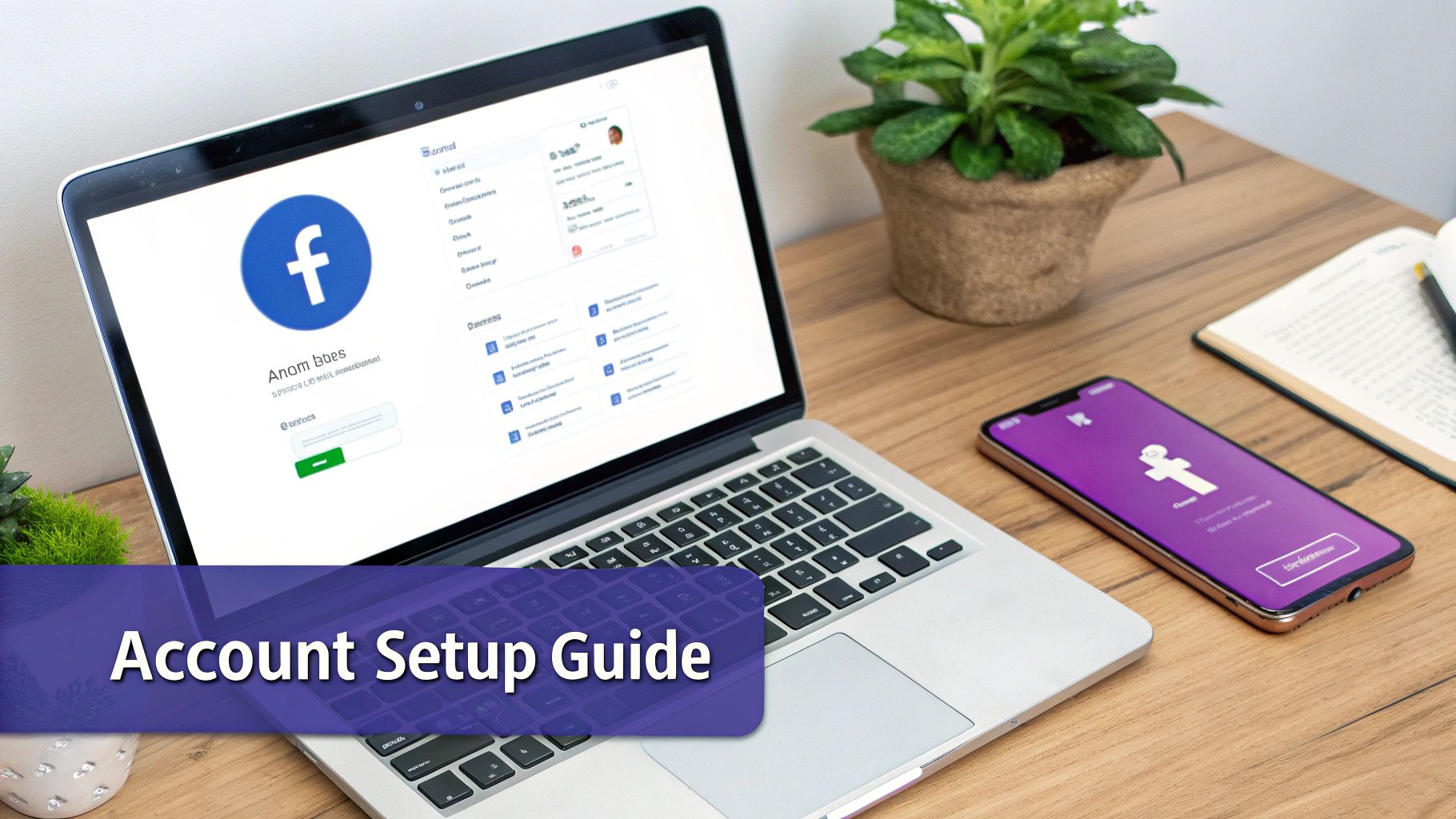
Copy the base pixel code into your site’s header—every page. Then, define custom events like BookConsult and PhoneCall to capture precise actions.
Integrating Your CRM
Syncing Facebook Lead Ads with your CRM means instant follow-up and accurate reporting.
Popular choices include Clio Grow, Lawmatics, HubSpot, and Salesforce.
You can use Facebook’s native connector or set up a webhook for real-time lead delivery.
Example Webhook Snippet
json
{
"object": "page",
"entry": [
{
"changes": [
{
"field": "leadgen",
"value": {
"leadgen_id": "LEAD_ID",
"adgroup_id": "ADSET_ID"
}
}
]
}
]
}
This code pushes new lead IDs straight into your intake workflows—no manual importing required.
Troubleshooting Common Issues
Document format mismatches often cause verification delays. A missing PDF header or an oversized file can hold up your account for days.
Before panicking, check your Support Inbox for error codes. Then:
Quick Tip List
- Upload PDFs under 4MB at high resolution
- Match your business address format to your utility bills
- Switch to manual review in Billing Overview for urgent fixes
Configuring Custom Audiences
Turn your existing contacts into powerful retargeting groups:
- Website visitors over the last 180 days via pixel data
- Email subscribers and past consultation leads
- Newsletter openers and webinar attendees
- Practice guide PDF downloaders
This keeps your ads front and center for people already familiar with your firm.
Reviewing Account Quality
Your Account Quality Dashboard highlights disapproved ads and policy violations.
Track these metrics every week:
- Policy Violations and how fast you resolve them
- Ad Review Time and current status
- Negative Feedback Rate from user reports
Tackle issues early to avoid sudden account restrictions.
Bringing It All Together
By nailing your Business Manager, Page setup, disclaimers, pixel, and CRM integration, you’re ready to build campaigns that convert.
Next up: mapping out ad sets by practice area and position in the funnel.
Structuring Campaigns And Audience Targeting
Your campaign setup is the foundation for efficient spend and high-quality leads. On Facebook, law firms often see the best results when ads are grouped by practice area, funnel stage, and location.
Splitting budgets according to client priorities gives you more control and sharper response rates. For instance, an estate planning firm we advised ran three separate campaigns—awareness, consideration, and conversion—each with its own creative and KPIs.
Dig deeper by layering custom audiences from past clients or newsletter subscribers. This simple step can cut your cost per lead by 20–30%.
- Segment past consultation leads in the last 180 days by service type
- Build a lookalike model from your highest-value cases
- Exclude existing clients and active matters to avoid wasted spend
Custom Audience Segmentation
Custom audiences let you stay top-of-mind with people who’ve already shown interest. A mass tort practice we worked with retargeted webinar sign-ups and saw 45% of them fill out a form on the second invite.
Splitting these audiences by geography ensures that your ads only appear where your firm is licensed to practice. That way, you’re not throwing impressions at leads you can’t serve.
“Sequential messaging lifted our click-through by 27% when we followed a three-step funnel.”
Lookalike Audiences And Exclusions
Lookalikes help you reach new prospects who mirror your best clients. Seed your model with the top 10% of closed cases, then fine-tune the similarity threshold to balance reach against precision.
Exclusions are just as important. Block current clients, staff, and unsubscribes so your budget stays focused on genuinely new leads.
- Use a 1% lookalike audience based on your highest-revenue cases
- Exclude contacts in your CRM tagged as converted or pre-qualified
Sequential Messaging Framework
A clear ad sequence guides prospects through awareness to action. Here’s a real-world example from an estate planning campaign that ran over two weeks:
Awareness video to introduce your expertise and build recall
Carousel ad highlighting client outcomes and practice areas
Consultation offer with a simple form fill or call button
| Awareness | Video views | Cold lookalikes 1% | 20% |
|---|---|---|---|
| Consideration | Engagement | Custom past leads | 30% |
| Conversion | Lead generation | Exclude converted clients | 50% |
Check out our guide on best practice Facebook ads for a deeper dive into segmentation tactics and real-world examples.
- Refresh lookalikes every 30 days to capture new client profiles
- Split-test geography buckets (city, metro, zip) to find your highest performers
Tight segmentation and clear exclusions improve relevancy and prevent budget bleed. Next, we’ll explore ad creative approaches that comply with legal rules and drive clicks efficiently.
Geographic And Practice Filters
Geographic filters keep ads relevant by zeroing in on the areas you serve. Combine this with interest-based layers—think small-business groups for bankruptcy attorneys or parenting forums for family law.
- Geo-fence high-value zip codes around courthouses or business districts
- Add demographic layers (age, homeownership, income bracket) to refine your reach
Budget Allocation By Funnel
Dividing your budget by funnel stage brings predictability and control. A common split is 20% awareness, 30% consideration, and 50% conversion—then adjust based on what’s moving the needle.
- Cap daily budgets to prevent overspend at the top of funnel
- Shift funds toward high-converting audiences during peak inquiry times
Key takeaway Audience overlap can spike your CPL by over 15% if not managed correctly.
Review audience insights weekly to spot overlap warnings and tighten exclusions. Tight audience analysis and creative alignment drive higher-quality leads and better cost control over time. Implement this setup and watch your ROI climb.
Optimizing Ad Creative And Ensuring Legal Compliance
Building Facebook ads for law firms isn’t about flashy claims. It’s a balancing act—creative enough to stand out yet precise enough to satisfy bar guidelines.
You’ll learn how to craft headlines, select images, and run tests without tripping over ethical rules.
Collaboration between marketers and compliance counsel is non-negotiable. Together, you’ll nail messaging and visuals that pass every bar’s scrutiny.
Effective Headline Formulas
A headline must grab attention without promising the moon. These formulas keep you on the right side of ethics:
- “How to [Benefit] Without [Risk]”: Offers relief without implying guaranteed results.
- “What Every [Prospect] Should Know About [Topic]”: Positions your firm as a trusted guide.
- “The Truth About [Service]”: Shares insight without hyperbole.
Sprinkle in power words like understand, discover, protect to spark curiosity. Steer clear of guarantee, win, or fast—they can set off compliance alarms.
Image Selection Guidelines
Photos can make or break credibility. Aim for authenticity over theatrics:
- Use team headshots in natural office settings.
- Showcase day-to-day moments instead of courtrooms.
- Blur or anonymize client details to safeguard privacy.
- Skip staged group photos in favor of candid interactions.
| Stock Photos | Quick and widely available | Can feel impersonal |
|---|---|---|
| Candid Team Photos | Inspires trust and relatability | Requires coordination |
Creative A B Test Case
A mid-sized personal injury firm swapped generic stock art for genuine snapshots of its staff brainstorming. In just one week, click-through rate jumped by 18%.
- Stock photo variant: Clean but distant.
- Candid team shots: Warm, relatable energy.
- Result: 18% lift in clicks and a surge in form completions.
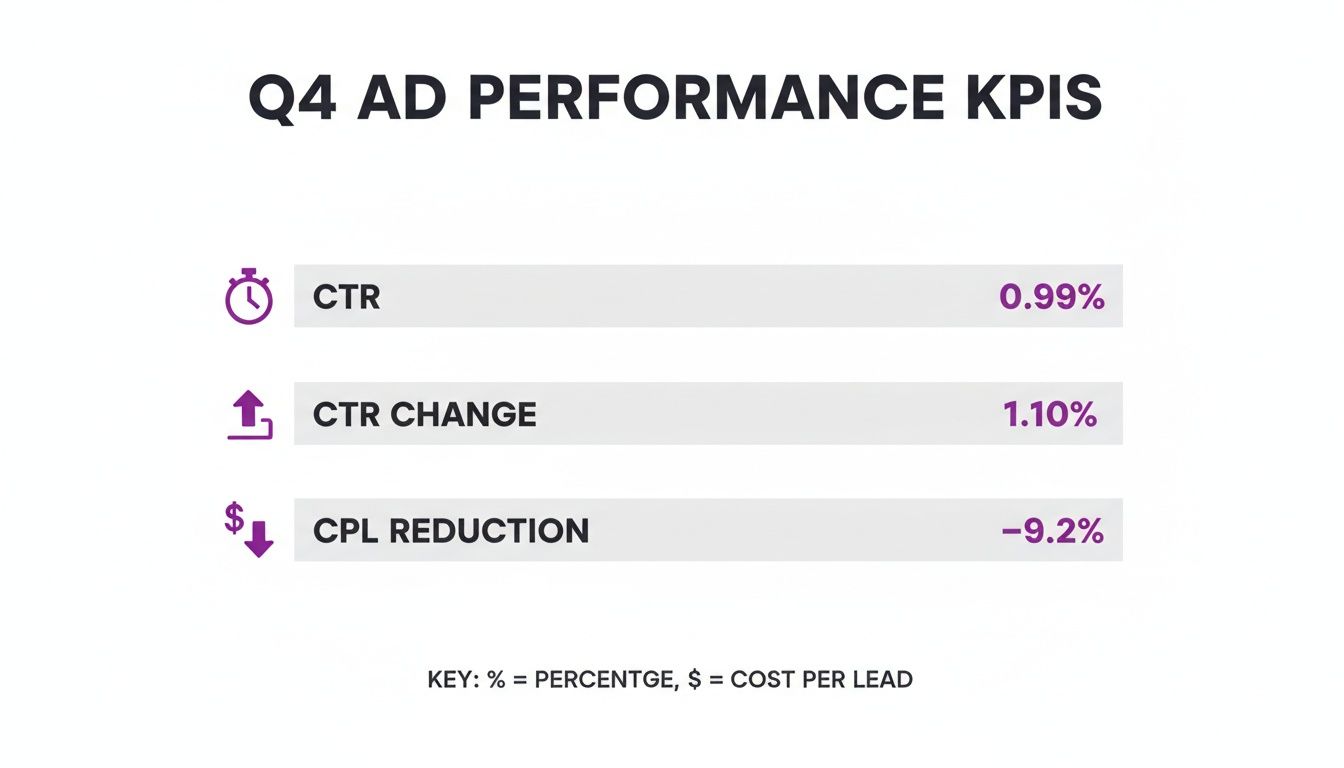
Current benchmarks show attorney Facebook ads climbing from 0.99% to 1.10% CTR, while cost-per-lead falls by 9.2%. Read the full research about Facebook ad benchmarks
Compliance Checklist
Don’t let a simple oversight stall your campaign. Tick off these items before you click “Publish”:
Attorney advertising disclaimer at the very top.
Clear note that no attorney-client relationship exists until you’re officially engaged.
No sweeping promises like “We Get You Maximum Settlement.”
Use only anonymized or consented testimonials.
Scan every image to protect client confidentiality.
Always run your final creative past your compliance officer before publishing to avoid costly rejections.
Run through this checklist on launch day to catch any last-minute issues.
You might be interested in our tips on crafting compelling ad copy.
Check out our guide on Facebook ad copywriting best practices.
Blending clear rules with creative testing turns compliance from a hurdle into a catalyst for better performance.
| Overstated Fees | No fees ever | Offer fee details “upon request” |
|---|---|---|
| Unapproved Testimonials | Photo without client consent | Add a written consent note to any testimonial |
Use this mini-reference to flag and fix red flags before launch.
Next Steps For Creative Compliance
Schedule a weekly sync with marketing and legal to review new ads.
- Track every headline and image variant for trends.
- Update your compliance list whenever bar regulations evolve.
- Centralize final approvals with a single designated reviewer.
- Conduct quarterly audits of all live ads and landing pages.
Consistent reviews, timely A/B tests, and strict compliance form the backbone of high-performing attorney ads. Over time, this disciplined approach lowers your cost-per-lead and fuels steady growth.
The smartest ad is both eye-catching and rule-abiding.
Implement these ad creative strategies and compliance measures to get more out of Facebook advertising for attorneys. Your A/B test starts now. Start testing new creative ideas immediately today.
Budgeting, Tracking And Testing To Maximize ROI
Aligning Budget With Your Goals
Every dollar you spend on Facebook ads should tie back to a goal you can measure. In my experience, law firms that earmark 2%–10% of their revenue for marketing—and put about 65% of that into digital channels—see the clearest path to ROI. Some consumer-focused funnels even hit CPLs under $20 once they dial in the details.
It’s not guesswork. This approach comes straight from real campaigns we’ve run. For more of these benchmarks, check out our recap on MyLegalAcademy.com.
Budget Allocation And Channel ROI
Below is a quick guide on how to slice your overall budget and what ROI multiples you can reasonably expect across top channels for law firms.
| 2%–4% | Display & Social | 3×–5× |
|---|---|---|
| 5%–7% | Search Ads | 4×–6× |
| 8%–10% | Retargeting | 8×–12× |
In practice, this mix helps you cover the full funnel—building awareness, engaging prospects, and capturing leads. Stick to these benchmarks and adjust based on your own case values and win rates.
Tracking Pixel And Offline Conversions
Connecting every touchpoint back to your ads is non-negotiable. The Facebook pixel captures on-site actions, while offline conversion imports link phone calls and signed retainers back to the right campaigns.
Here’s what I always do first:
- Define custom events like ConsultationBooked and CallReceived
- Import lead data from my CRM to verify form fills
- Set up automated rules to pause ad sets that miss CPL targets
Mapping offline outcomes to your ad sets gives you a crystal-clear view of true cost-per-lead—and lets you shift spend to the winners.
Smart Bid Strategy Tactics
Getting bids under control can be the difference between profit and needless spend. From my work with personal injury firms to estate planning practices, these tactics consistently lower CPL.
- Use cost cap bidding to lock in your maximum CPL while letting Facebook optimize delivery
- Apply bid caps for tight control during competitive periods
- Test lowest cost bidding to maintain volume with stable audiences
“Cost cap bidding helped us lock in efficiency without losing volume,” says a Rebus account strategist after trimming a campaign’s CPL by 12%.
Testing Framework For Continuous Improvement
You’ll never stop learning. A simple rotation of audiences, creative, and bid strategies unveils the top performers over time:
- Audience Segmentation (Monitor: CPL, Duration: 7 days)
- Ad Creative (Monitor: CTR, Duration: 5 days)
- Bid Strategy (Monitor: Cost per result, Duration: 10 days)
Keep a live spreadsheet with these columns:
- Audience segment and size
- Creative version (headline + image)
- Bid strategy (manual vs. automated)
- Key results (CPL, CTR, conversion rate)
Rotate tests weekly and watch how small shifts in targeting or imagery can unlock big efficiency gains.
In one campaign, tightening the lookalike audience improved CTR from 0.99% to 1.10%, while CPL dropped 9.2%. Those numbers add up fast when you’re scaling.
Example Campaign Template
Standardizing your setup means teammates can jump in and make optimizations without missing a beat:
| PI Retargeting W1 | Lead Generation | Website visitors (30 days) | $50 | Cost Cap |
|---|---|---|---|---|
| Estate Planning Look1 | Traffic | 1% Lookalike Top Clients | $30 | Lowest Cost |
| Divorce Awareness | Video Views | Interested in family law | $20 | Manual Bid |
Each row tracks CPL, CTR, and conversion count side by side. Share this sheet in your drive and update it daily for full transparency.
Consistent updates and team access ensure that no winning variant stays underfunded.
Next Steps For Tracking And Optimization
Don’t let budget pacing blindside you. Here’s a quick cadence to stay on track:
- Weekly: Review pacing and pause or boost ad sets
- Monthly: Align attribution reports with your firm’s revenue recognition
- Quarterly: Hold strategy sessions with finance and intake to uncover cost drivers
Keep an eye on case win rates versus lead volume to fine-tune your target CPLs. Then loop your tracking workbook into your CRM so every new case entry tags the source campaign.
Tracking every dollar from ad click to signed retainer builds confidence and clarity in your marketing ROI.
Common Questions About Facebook Advertising For Attorneys
When you’re looking past vanity metrics, it’s all about the actions that truly indicate intent. Did someone book and attend a consultation? Download your case guide? Jump into a chat? Those are the moments that matter.
- Average Consultation Time (in minutes) per campaign
- Percentage Of Prospects Matching Your Practice Criteria
- Retainer Agreements Signed per ad set
Ensuring Compliance At Scale
Nobody has time for endless manual reviews. Automate your disclaimers and workflows to cut down errors and speed up approvals.
- Inject an “Attorney Advertising” notice into every ad text automatically
- Sync ad copy with your compliance checklist using tailored templates
- Route final creatives through a designated legal reviewer before launch
“Scaling compliantly means fewer rejections and a more predictable ad cadence.”
Best Retargeting Tactics
Retargeting is your secret weapon for warming up leads who already know you.
- Sequential video ads that walk prospects through your three-step approach
- Dynamic case study ads customized for each practice area
- Retarget users who downloaded resources with a fresh lead magnet
- Chatbot follow-up messages for anyone who went silent
This strategy ramps up relevance and drives down your cost per lead (CPL).
When To Adjust Your Budget
Align budget moves with performance signals and seasonal peaks.
| CPL exceeds your target for 7 days | Reduce spend by 10% |
|---|---|
| Lead volume drops 20% week-over-week | Increase bids by 15% |
| Major local event drives demand | Allocate 30% of daily budget |
Keep a close eye on these metrics to protect your ROI.
Next up: sharpen your audience definitions and experiment with bid strategies. Consistent tweaks are how you cut costs and reach more qualified clients.
Ready to transform your Facebook ads and capture high-value legal leads? Partner with Rebus and supercharge your firm’s growth today.