Seo and adwords: Unify your marketing for powerful results
Let's cut right to the chase: the core difference between SEO and Google Ads is about paying for placement versus earning it.
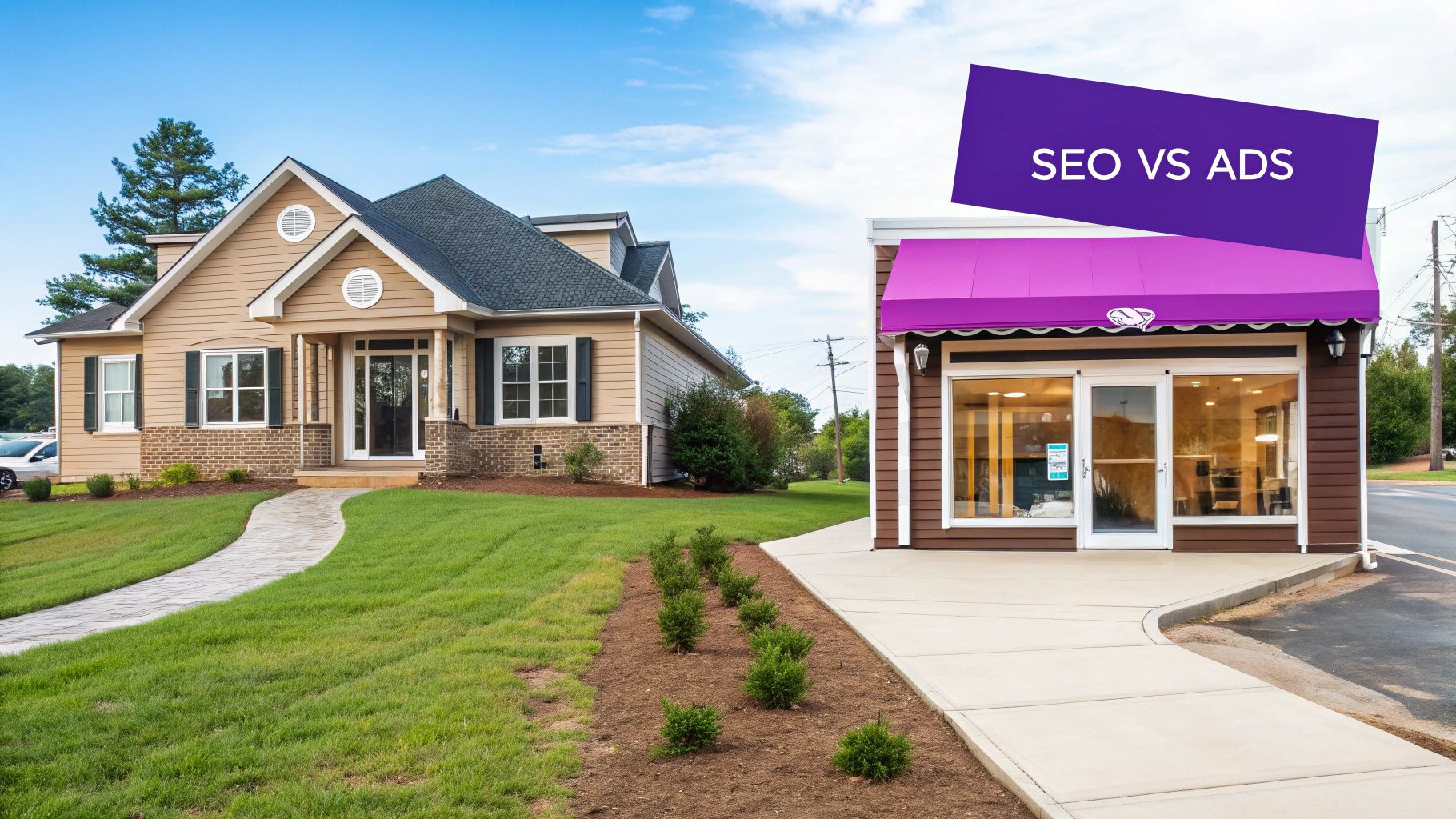
Think of it this way: SEO is like buying a house. You invest time, effort, and money into building equity. It’s a long-term play, but once you own it, you’ve built a valuable, sustainable asset that keeps paying you back.
Google Ads, on the other hand, is like renting a slick, high-traffic storefront in the trendiest part of town. You get instant visibility and foot traffic the second you open the doors. But the moment you stop paying rent, you’re gone.
SEO vs Google Ads Two Powerful Channels One Goal
To really dominate the search results, you can't just pick one. SEO and Google Ads aren't rivals; they're two sides of the same coin. When you get them working together, they create a marketing machine that captures both immediate demand and long-term trust.
SEO is the marathon. It's the craft of optimizing your website to climb the rankings in the organic—or non-paid—search results. This means shoring up the technical foundation of your site, creating content that actually helps people, and earning authority when other reputable sites link back to you. If you want to go deeper, here's a complete guide to what SEO is.
Google Ads is the sprint. It’s a pay-per-click (PPC) advertising platform where you bid on keywords to get your ads placed at the top or bottom of the search results. It’s fast, precise, and gives you a ton of control, letting you target specific demographics, locations, and even what people have searched for before.
Understanding Their Unique Strengths
The big differences boil down to three things: cost, speed, and trust.
SEO is a slow burn. It takes a consistent investment of time and resources, but the results compound, building an asset that doesn't just disappear overnight. Google Ads delivers instant traffic, but it demands a constant budget to stay visible. Getting a handle on the nuances between organic search vs paid search is the first step to building a smart digital strategy.
To make this crystal clear, here’s a quick side-by-side breakdown.
Quick Comparison SEO vs Google Ads
| Placement | Earned placement in organic results | Paid placement, marked with "Ad" label |
|---|---|---|
| Time to Results | Slower, typically 3-6+ months | Immediate, as soon as campaign is live |
| Cost | "Free" clicks, but requires investment in resources | Pay-per-click (PPC) model |
| Longevity | Results are long-lasting and sustainable | Visibility stops when you stop paying |
| Click-Through Rate | Generally higher for top organic spots | Lower, as users often prefer organic results |
| Trust Factor | High, seen as more credible and authoritative | Lower, as users know it's a paid advertisement |
| Targeting | Broad targeting based on content relevance | Hyper-specific targeting (demographics, location, etc.) |
| ROI | High over the long term as equity builds | Can be high, but directly tied to ad spend |
This table shows there’s no single "better" option—just the right tool for the right job.
The real power isn't in choosing one over the other. It's in knowing when to deploy each channel and how to make them work together to amplify your overall market presence and drive sustainable growth.
Don't underestimate the power of organic search. SEO still drives a whopping 53% of all website traffic across the globe. And since many searchers instinctively trust organic listings more, 65% of them click on organic results over the paid ones. This just hammers home the incredible long-term value SEO can deliver.
Ultimately, the goal isn't to pick a winner in the SEO vs. Google Ads debate. It's about orchestrating them in harmony to own the entire search page.
Driving Immediate Impact with Google Ads
So, SEO is your long-term wealth-building strategy. But what if you need cash flow right now? That’s where Google Ads comes in. It’s the marketing equivalent of flipping a switch and getting instant, predictable traffic.
Think of it as a direct line to your ideal customer, right at the moment they’re typing their problem into Google. This is the raw power of pay-per-click (PPC) advertising.
While organic rankings can take months to build, a well-crafted Google Ads campaign can catapult you to the top of the search results in a matter of hours. This kind of speed is a game-changer for launching a new product, promoting a flash sale, or just getting the phone to ring this week. You’re in the driver's seat—controlling the budget, the message, and exactly who gets to see it.
Pinpoint Targeting and Total Control
The real magic of Google Ads isn't just the speed; it's the ridiculously granular targeting. You can go way beyond simple keywords to find your audience based on location, age, interests, and even their past browsing behavior. This is how you make every ad dollar count.
This level of control lets you build campaigns for very specific goals. An e-commerce store, for instance, can use Google Shopping ads to show off their products with images and prices right in the search results. If you want to go deeper on that, the folks at Wand have a great guide on Ecommerce PPC Marketing: Boost Sales with Proven Strategies.
The core benefit of Google Ads is its ability to turn search intent into measurable action almost instantly. You aren't just buying traffic; you're buying opportunities to connect with motivated customers who are actively seeking a solution.
Let's be clear: Google Ads isn't just a player in the paid ad space—it is the space. It commands 69% of the global PPC market and reaches a staggering 90% of all internet users. Its search ads hit an average conversion rate of 3.75%, proving just how effective they are at capturing people who are ready to act.
Scalable Growth and Quick ROI
Here’s one of the best parts about Google Ads: it’s scalable. Once you find a winning ad campaign that’s bringing in a positive return on investment (ROI), you can simply dial up the budget to get more of those same results. It’s a predictable engine for growth.
Imagine a local plumber. They can set a daily budget to target people searching "emergency plumber near me" within a five-mile radius. No wasted ad spend on people across the state—just a steady stream of calls from folks with leaky pipes who need help, now.
Here’s how different businesses can use Google Ads for an immediate boost:
- E-commerce Brands: Want to test a new product line? Drive a few hundred dollars of targeted traffic to the page and see if people bite before you order a thousand units from your supplier.
- Service-Based Businesses: Having a slow month? Launch a limited-time offer for a free consultation, targeting professionals in your city to fill the sales pipeline fast.
- Startups: Need your first 100 users? Target early adopters searching for solutions to a specific problem you solve. It's the perfect way to get initial traction and invaluable feedback.
Ultimately, Google Ads gives you the speed, control, and data you need to make smart marketing decisions on the fly. It's the rocket fuel that provides the immediate momentum every business needs to succeed in the long run.
Building Long-Term Authority with SEO
If Google Ads is the rocket fuel for a quick launch, then Search Engine Optimization (SEO) is the painstaking work of building the actual spaceship. It’s the foundational asset for any kind of sustainable growth online, turning your website from a simple digital brochure into a trusted authority that consistently pulls in your ideal customers.
Think of it as earning your reputation instead of just buying attention. While paid ads can stick you at the top of the page for a fee, SEO is the process of proving to Google—and its users—that you actually deserve to be there. That earned trust is a durable competitive advantage that keeps paying you back long after an ad campaign has ended.
The Three Pillars of Modern SEO
Building this kind of digital authority isn’t magic. It’s a strategic process built on three core pillars. Get these right, and you’ll have a strong, resilient online presence that can weather algorithm changes and keep you ahead of the competition for years.
Technical Website Health: This is the bedrock. It’s all about making sure your site is fast, secure, mobile-friendly, and easy for search engines to crawl and understand. A technically sound site is like a well-built house—everything else stands on this foundation.
High-Quality On-Page Content: This is the stuff your audience actually sees. It’s the blog posts, service pages, and product descriptions that answer their questions and solve their problems. Great content shows off your expertise and gives Google a solid reason to rank you for the right search terms.
Off-Page Authority (Backlinks): This pillar is all about building credibility outside your own website. When another reputable site links to your content, it acts as a vote of confidence. These backlinks signal to search engines that you're a trustworthy source, which gives your authority a major boost.
SEO is the art and science of building a digital asset that generates compounding returns. Each piece of content you create, every backlink you earn, and every technical improvement you make adds to its long-term value, steadily reducing your customer acquisition costs.
The Compounding Power of Consistent Effort
Here's the beautiful part. Unlike paid advertising, where the results vanish the second you stop paying, SEO builds on itself. An article that hits the first page today can drive traffic and leads for years to come. The authority you build in one area makes it easier to rank for new keywords down the line, creating a virtuous cycle of growth.
This is where the true power of combining SEO and AdWords really shines. The data from your paid campaigns can tell you exactly what to focus on in your SEO content strategy. At the same time, the authority you build through SEO creates a stable, organic source of traffic that makes your business far less reliant on ad spend.
From Strategy to Execution
Look, the journey to building organic authority is a marathon, not a sprint. It takes a clear plan, consistent work, and a healthy dose of patience. Success comes from a deep understanding of how search engines think and, more importantly, what your audience is actually looking for. Our team specializes in crafting and implementing these long-term strategies. If you want to see how we approach it, explore our comprehensive SEO services that help businesses build digital assets that last.
Ultimately, investing in SEO means you're investing in the future of your brand. It’s how you build a powerful, self-sustaining engine for growth that attracts, engages, and converts customers for years to come.
Your Integrated SEO & AdWords Playbook
Thinking about SEO and Google Ads as two separate channels is old-school. Seriously. The real growth happens when you smash them together and treat them like a single, powerful marketing engine, where each part feeds and strengthens the other.
This integrated approach lets you dominate the search results page, make smarter decisions faster, and ultimately, get more bang for every buck you invest.
Forget the "either/or" debate. This playbook is about creating a feedback loop. Your paid campaigns become a real-time data lab for your long-term organic strategy, while your strong organic presence makes your paid ads cheaper and more effective. It’s about creating a whole that is far greater than the sum of its parts.
Use PPC Data to Fuel Your SEO Strategy
One of the biggest wins from combining SEO and AdWords is using paid search data to completely eliminate guesswork. SEO can be a slow burn, we all know that. But Google Ads gives you immediate feedback on what’s actually working.
You can instantly see which keywords drive the most clicks and—more importantly—which ones convert into actual, paying customers. This is pure gold. Instead of spending months trying to rank for a keyword you think is valuable, you can use Ads data to know for sure.
Here’s how to put this into action:
- Pinpoint High-Converting Keywords: Dive into your Google Ads reports. Which search terms have the highest conversion rates? These are your proven money-makers. They should immediately become top priorities for your SEO content and on-page optimization.
- Test Ad Copy for Meta Descriptions: Find your best-performing ad headlines and descriptions. These have already been battle-tested and proven to attract clicks. Use them as inspiration for your page titles and meta descriptions to boost your organic click-through rate (CTR).
- Discover New Keyword Opportunities: Dig into the "Search Terms" report in Google Ads. You’ll almost always find unexpected long-tail keywords people are using to find you. These are often less competitive and can be easy wins for your SEO strategy.
Optimize Landing Pages for Both Channels
A high-quality landing page is mission-critical for both SEO and paid search success. It’s non-negotiable. Google Ads rewards pages that provide a great user experience with a higher Quality Score, which can lower your cost-per-click (CPC) and improve your ad position.
Coincidentally, the factors that lead to a high Quality Score—things like relevant content, fast load times, and clear navigation—are the exact same things that help a page rank well organically. When you build pages that serve both channels, you're creating a much more efficient system.
When you create an SEO-optimized landing page that also serves your ad campaigns, you're hitting two targets with one stone. You improve your ad performance, lower your costs, and simultaneously build a long-term asset that can rank organically.
The synergy here is completely changing how smart businesses approach marketing. An integrated strategy is essential for a competitive edge, especially when you consider that businesses typically earn $2 for every $1 spent on Google Ads. And with 84% of brands seeing positive results from their PPC efforts, you can't afford to ignore it. Add in the fact that 46% of all Google searches have local intent, and a combined approach ensures you’re visible to customers at every single stage. You can explore the latest digital marketing statistics for more data-backed trends.
To get your SEO foundation right, you need to focus on a clear, step-by-step process. This infographic breaks down the core pillars of building sustainable organic authority.
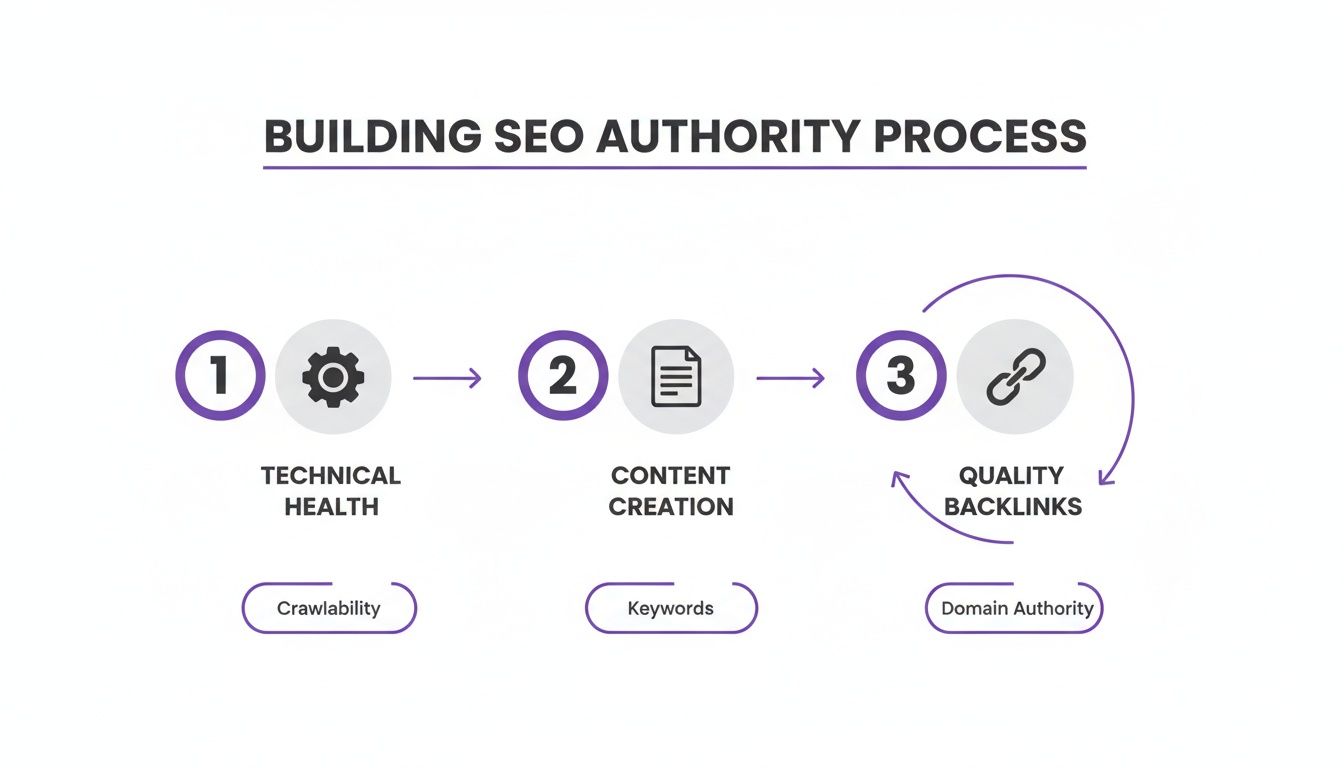
As the flow shows, success starts with a rock-solid technical foundation, followed by high-value content, and is then reinforced by authoritative backlinks.
The table below breaks down exactly how you can combine your efforts for maximum impact. Think of it as your go-to reference for turning two separate channels into one cohesive growth machine.
Integrated SEO & AdWords Tactical Playbook
| Keyword Conversion Data | Identify keywords in Google Ads with the highest conversion rates. Prioritize these "money" keywords in your SEO content strategy. | Stop guessing. Focus SEO efforts on keywords already proven to drive sales and leads, maximizing your ROI. |
|---|---|---|
| Ad Copy Testing | Test different headlines and descriptions in your ads. Apply the winning copy to your organic page titles and meta descriptions. | Increase your organic click-through rate (CTR) by using language that has already proven to resonate with searchers. |
| Remarketing Lists | Create remarketing audiences from your organic traffic (e.g., blog readers). Serve them highly relevant ads on the Google Display Network. | Nurture warm leads who have already shown interest in your content, bringing them back to convert. |
| Landing Page Synergy | Build landing pages optimized for both user experience (for Quality Score) and SEO (for organic ranking). | Lower your ad costs (CPC) while simultaneously building a long-term organic asset that generates free traffic. |
| "Double Dipping" on SERPs | Bid on your branded keywords and other top-performing organic terms to secure both the ad and the #1 organic spot. | Dominate search results, push competitors down, and build immense brand credibility and authority. |
Each of these plays is designed to create a feedback loop where your paid efforts make your organic strategy smarter, and your organic strength makes your paid campaigns more efficient.
Dominate the Search Results Page
Why settle for one spot on the search results page when you can have two? When you have both a top-ranking organic result and a paid ad for the same keyword, you dramatically increase your visibility and credibility.
This "double-dipping" strategy does a few powerful things:
It Maximizes Your Real Estate: Owning both a paid and organic spot physically pushes your competitors further down the page, making them far less likely to be seen.
It Boosts Overall Clicks: Studies have shown that having both an ad and an organic listing for the same search query increases the total number of clicks you receive. Some users instinctively click ads, while others prefer organic results; this strategy captures both audiences.
It Builds Trust: Seeing your brand in multiple places on the results page reinforces your authority and makes you look like the dominant player in your industry. It’s a huge psychological win.
This integrated playbook isn't about running two separate campaigns in silos. It's about creating a unified search presence where every action in one channel directly benefits the other, driving powerful, compounding growth for your business.
Essential Tools for Your Integrated Strategy
Trying to run an integrated strategy without the right tools is like trying to navigate a road trip without a map or a dashboard. You’re burning gas, but you have no idea if you’re heading in the right direction, how fast you’re going, or when you’re about to run out of fuel.
You need a solid tech stack to connect the dots. The right setup shows you how a paid ad click can lead to an organic search later on, giving you a full picture of the customer journey instead of just disconnected snapshots. Let's look at the must-haves.
All-In-One SEO and PPC Platforms
For a bird's-eye view of the entire competitive landscape, you can't beat the all-in-one platforms. Think of tools like Semrush and Ahrefs as the Swiss Army knives for digital marketers. They’re packed with features that bridge the gap between your paid and organic efforts.
These platforms let you ethically spy on your competition. You can see the exact keywords they’re bidding on in Google Ads, peek at their ad copy, and even get a solid estimate of what they're spending each month. This kind of intel is gold for refining both your ad bidding and your long-term SEO content plan.
Here’s a look inside Semrush, showing how you can dissect a competitor’s paid keyword strategy.
This view instantly tells you which keywords a competitor values enough to pay for. That’s a massive clue about which terms are most likely driving conversions and making them money.
Comprehensive Analytics and Tracking
While competitive tools show you what everyone else is doing, you need to track your own performance with absolute precision. This is where Google’s free tools are non-negotiable for tying your SEO and Ads data together.
- Google Analytics 4 (GA4): This is your command center. When you link your Google Ads account to GA4, you can finally track the entire customer journey across both channels. You’ll see how users who first found you through an ad might come back a week later through organic search to finally make a purchase.
- Google Search Console: This one is all about your organic search health. Search Console gives you the ground truth on which keywords you're ranking for, your click-through rates, and any technical hiccups holding your site back from page one.
The real magic happens when you create a seamless data loop. Search Console shows you which organic keywords are starting to pick up steam. You can then take those keywords and test their commercial intent with a small, targeted Google Ads campaign. It’s a powerful, data-driven feedback cycle.
Budgeting and Performance Forecasting
A huge part of a successful integrated strategy is knowing where to put your money. How much should you invest in Google Ads for those quick wins without starving your long-term SEO efforts?
Forecasting tools help you model different scenarios based on how much you're willing to spend on ads. Before you even launch a campaign, you can use something like a Google Ads calculator to get a rough estimate of potential clicks, costs, and conversions. This kind of planning makes sure every dollar you spend has a clear purpose and an expected return, tying your paid campaigns directly to your bigger business goals.
Your Top Questions, Answered
Alright, let's get into the nitty-gritty. When you start blending SEO and Google Ads, a ton of questions pop up. It's totally normal. Here are the straight-up answers to the ones we hear the most, so you can move forward with your strategy without any guesswork.
Should I Stop Running Ads Once My SEO Hits Page One?
It’s the million-dollar question. You see your site climbing the organic ranks, and that little voice in your head whispers, “Hey, maybe we can save a few bucks and turn off the ads now.”
Resist that voice. Seriously. It’s almost always a mistake to pause your ads, even if you’ve snagged the #1 organic spot.
Think of it as "owning the block." By showing up in both the top ad spot and the top organic position, you're not just visible—you're dominant. You shove competitors so far down the page they might as well be on page two. This one-two punch massively boosts your total clicks. Plus, your ad gives you something SEO can't: total message control. Got a flash sale or a killer new feature? Your ad copy can shout it from the rooftops, right now.
How Do I Split My Budget Between SEO And Google Ads?
There’s no magic formula here, but there is a smart way to think about it. The right budget split is all about your business goals and, more importantly, your timeline.
If you need leads, sales, or sign-ups yesterday, Google Ads is your best friend. It’s a cash-for-results machine. Pouring a bigger slice of your budget into ads at the start will get the phone ringing immediately.
But if you're building a brand for the long haul—an asset that keeps generating traffic without you paying for every single click—then a steady, consistent investment in SEO is non-negotiable.
Here’s a common game plan for new businesses:
- Phase 1 (The Launch): Go heavy on Google Ads, maybe a 70/30 split. You need those quick wins and, just as crucial, the data on which keywords actually convert.
- Phase 2 (The Climb): As your SEO starts to kick in and organic traffic picks up, you can start shifting the budget. Maybe it becomes more of a 50/50.
- Phase 3 (The Groove): Once you're established, you find a balanced rhythm. You'll keep investing in both to defend your market share and maintain a healthy flow of leads from both short-term and long-term plays.
Your budget isn't a "set it and forget it" thing. It’s a living part of your strategy. Be ready to adjust it based on your growth, what your competitors are doing, and what the data from both channels is telling you.
Does Paying For Google Ads Give My SEO A Boost?
This is one of those myths that just won't die. Let's kill it for good: No. Google has stated repeatedly that paying for ads has zero direct impact on your organic search rankings. The algorithms that decide ad placement and organic rankings are completely separate. You can't buy your way to the top of the organic results.
But—and this is a big but—there are some powerful indirect benefits.
A successful Google Ads campaign drives a ton of traffic and gets your brand name in front of way more people. This can lead to more folks searching for your brand directly, more mentions on social media, or even a few natural backlinks from people who discovered you through an ad. All of those things are positive signals for SEO.
Even better, the data you get from ads is pure gold. You'll know exactly which keywords, headlines, and offers make people click and convert. You can take those proven insights and bake them right into your website's content and on-page SEO. That’s how you use paid data to get an organic edge.
At Rebus, we don't treat SEO and Google Ads like they're on different teams. We build unified strategies where they work together to create something much bigger than the sum of their parts. If you're ready to stop juggling separate campaigns and start building a real growth engine, let's talk. Learn more about our approach.